 Sedona City Guide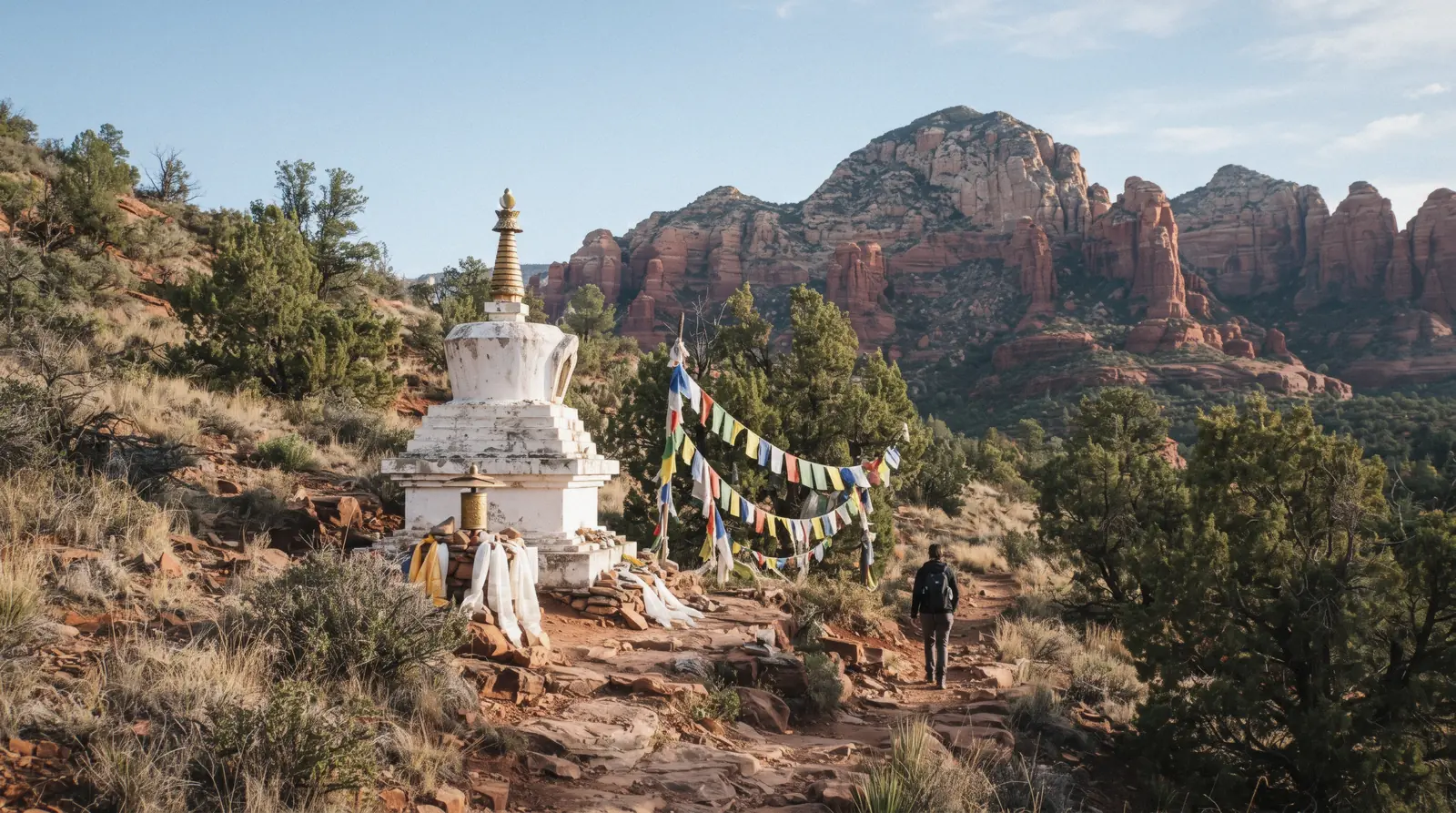
Amitabha Stupa
The Amitabha Stupa and Peace Park is a free, open-air Buddhist stupa and meditation park on a hillside in West Sedona, built by the Kunzang Palyul Choling community and open to visitors of every faith. This page covers the hours, the free parking, the etiquette the property's own community publishes and the short walk in; it is also this site's answer to a quiet, free thing to do, alongside the rest of the free things to do in Sedona list. The homepage's own list of quiet, low-cost Sedona stops starts from the top of town.
Quick answer Hours, price, etiquette, parking, in three lines
The Amitabha Stupa and Peace Park is free, open dawn to dusk daily in West Sedona, with a parking lot open 8:30 am to 6 pm in summer and to 5 pm in winter; it is supported entirely by donations.
Key takeaways
- It is a genuine Buddhist stupa built for prayer and meditation, not a vortex site; the community that runs it says so directly, covered in is the Stupa a vortex
- Circumambulate the stupa clockwise, keep your voice quiet, and never climb or place anything on the stupa itself, the full etiquette is on visiting the stupa
- If the gate is closed, park on Pueblo Drive and walk in on well-marked trails; the e-bike sunset route also stops here as part of a wider Dry Creek loop
- It is one of this site's answers to a free, quiet thing to do in Sedona, alongside the rest of the free things to do list
Key facts
Opening hours
| Grounds, daily | Dawn–Dusk |
|---|---|
| Parking lot, summer | 08:30–18:00 |
| Parking lot, winter | 08:30–17:00 |
Closed Not stated; open year-round on the sources fetched
Planning it
- Time needed
- Not stated by the community; our routing: 20 to 30 minutes for the stupa and altar, 45 minutes to an hour with the Tara Stupa and the medicine wheel
- Book ahead
- Optional — walk-up usually fine
- Address
- 2650 Pueblo Dr, Sedona, AZ 86336
There is no admission fee at the Amitabha Stupa; the property is entirely donation-supported, priced from the community's own site on 9 September 2026. The one product on the market is a guided e-bike route that stops here alongside other West Sedona sights.
Are you driving here to walk in quietly on your own, or do you want it as one stop on a guided ride?
| Option | Price | Includes | Cancel | Book |
|---|---|---|---|---|
| Walk in on your ownEveryone. There is no ticket; donation boxes sit at the entrance and beside the stupa itself for anyone who wants to give | Free, donation-supported | Grounds access, the Amitabha and Tara Stupas, the medicine wheel and walking trails | Nothing to cancel | Official site |
| E-bike sunset tour, Dry Creek area and the StupaVisitors who want the Stupa as one stop on a guided sunset ride through West Sedona rather than driving and parking here alone | $135 | 2-hour guided e-bike route stopping at the Seven Sacred Pools and the Stupa, 100% on pavement | Set by the operator at booking | Check Availability |
The Amitabha Stupa charges nothing and sells nothing of its own; the e-bike tour above is a paid route that happens to stop here, not an entry product. A donation at either box on the property is the only money question this stop actually raises.
Tours that include the Amitabha Stupa
The e-bike route below is the one product on the market that stops at the Stupa itself; the two town tours cover the wider West Sedona area without a confirmed stop here. Prices as listed in Q3 2026.
 from $135
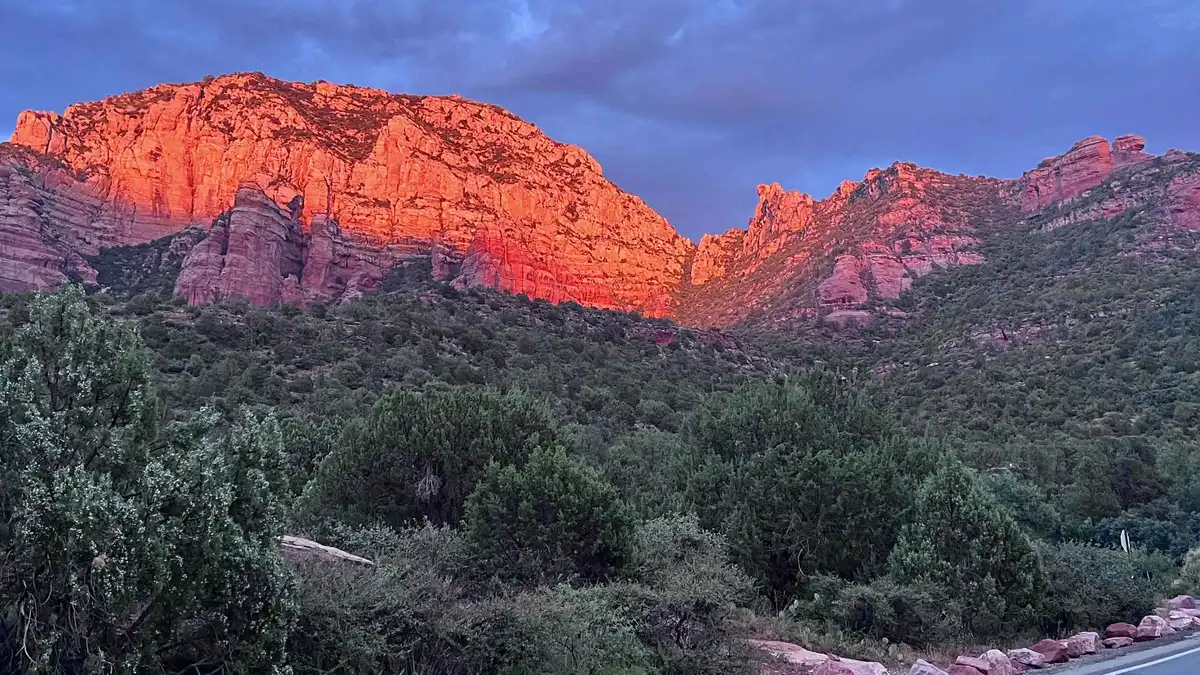
Sedona: E-Bike Sunset Tour Dry Creek area and Stupa
A paved e-bike route through the Dry Creek area to the Amitabha Stupa, combining a red rock ride with a stop most visitors otherwise drive to. Suits riders who want to see the Stupa as part of an active outing rather than a quick parking-lot visit.
Check Availability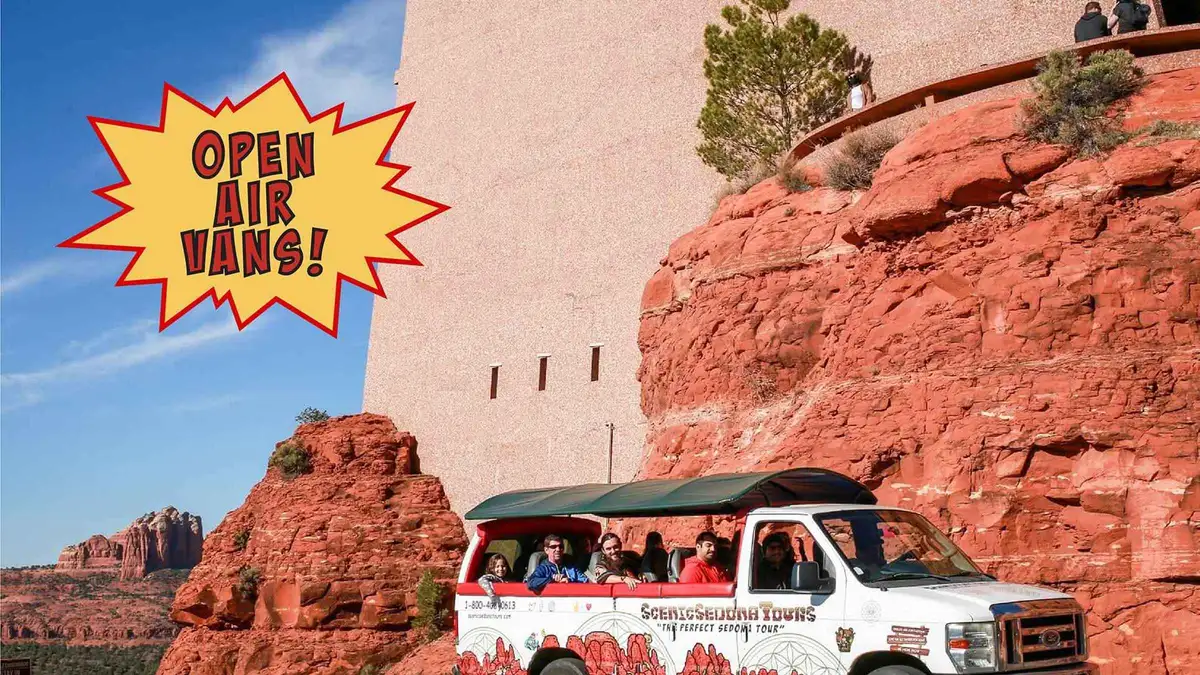 from $126
Most-reviewed sightseeing tour on this page (212 reviews)
from $126
Most-reviewed sightseeing tour on this page (212 reviews) Sedona: Open-Air Van Tour with a Local Guide and 6 Stops
A longer open-air van circuit with six stops mixing sightseeing, shopping and food rather than a single scenic loop. Suits visitors who want to break up the drive with time on foot at each stop.
Check Availability from $63
Sedona: The Magic of Sedona Highlights Tour
An open-air bus sightseeing loop with a local guide covering Sedona's geology, vortex claims, and history across several photo stops. Suits visitors who want an overview of the whole town on one short ride.
Check AvailabilityPrices, ratings and details are the platform's own, checked in Q3 2026; dollar figures are the listed prices — the platform bills in your account's currency.
What the Amitabha Stupa Is: a Working Buddhist Site, Not a Sculpture
The Amitabha Stupa and Peace Park is the activity center of Kunzang Palyul Choling in Arizona, a Tibetan Buddhist Vajrayana community, built on private land the community owns and opened to the public of every faith.
Built from the vision of Jetsunma Ahkon Lhamo Rinpoche
The Amitabha Stupa and Peace Park came from the vision of Jetsunma Ahkon Lhamo Rinpoche, a recognized reincarnate bodhisattva (Tulku) and lineage holder in the Nyingma tradition, who resided in Sedona for about ten years before relocating to her main temple in Poolesville, Maryland [tara.org]. Building the 36-foot Amitabha Stupa took about 18 months, led by Tulku Sang-ngag Rinpoche, a Tibetan lama and master stupa builder, with most of the labor performed by volunteers who traveled from around the world to work on it, maintaining a strict daily schedule of practice and diet throughout the project.
Consecrated in August 2004
The stupa is hollow and filled with offerings blessed in ceremonies before installation and again in a three-day consecration in August 2004: hundreds of millions of written prayers, 3,600 handmade miniature stupas called tsa-tsas, offerings from every continent, and relics attributed to past Buddhas and enlightened masters, alongside food as an antidote to hunger and traditional medicines as an antidote to illness [tara.org]. Fewer than 100 stupas exist in the Western Hemisphere, and 27 of them, including both stupas on this property, were built by Jetsunma Ahkon Lhamo and her temple.
The wooden Buddha statue and the medicine wheel
A mahogany statue of Shakyamuni Buddha, a gift from a local gallery owner and carved from a single piece of Balinese mahogany, sits above the Amitabha Stupa. Nearby, a Native American medicine wheel honors a Tibetan prophecy from the 7th century about a connection between Tibetans and Native Americans, matched by a corresponding Hopi tradition [tara.org].
Who actually maintains the grounds
Kunzang Palyul Choling is a Buddhist organization built around compassionate outreach as much as the stupa itself; the local Arizona community holds regular practices at the site and offers presentations on the 2,500-year history of stupas in general and this one specifically, on a schedule that changes with the season and weather. The property is privately owned by the organization, not a city or state park, which is why the etiquette above comes from the community directly rather than from a Forest Service or state parks sign.
Is the Stupa a Vortex? The Community Says No
Many visitors ask, and the community that built and runs the property answers directly on its own site: "A Stupa is NOT a vortex. While there is certainly vortex energy on the Stupa land, it's not correct to describe the Stupa as a vortex" [tara.org]. That is the property's own distinction, not ours to soften or overstate in either direction.
What the community does claim is a Buddhist framework: a consecrated stupa is described as a spiritual generator whose power comes from how it was built, its location and its contents, working, in that description, for visitors of any faith. None of that is a measurable claim any agency certifies, and this page repeats it as the community's own stated belief, not as fact.
Visiting the Stupa: The Etiquette Its Own Community Publishes
The community asks visitors to learn the etiquette before arriving, both to deepen the visit and to respect a site still actively used for prayer.
Circumambulate clockwise
Traditionally, visitors prostrate, pray, meditate, make offerings and walk around a stupa in a clockwise direction; many recite the mantra Om Mani Padme Hung while walking, though the community says any prayer from any tradition works the same way [tara.org]. At the end of a visit, the community suggests dedicating whatever positive intention the visit created to the benefit of others, using your own words or the community's own dedication prayer.
Do not climb or mark the Stupa
Visitors are asked not to climb on the stupa, mark it in any way, or place anything directly on it; an offering goes on the altar in front of it instead. The bowls of water on the altar represent pure offerings and are filled each morning and emptied each evening by a volunteer; nothing, including fingers, should go into them.
Quiet voices, and where drumming is allowed
Many visitors come specifically to meditate, so the community asks for quiet voices throughout. Flutes and singing bowls are permitted but not directly at the Amitabha Stupa; drumming is allowed only at the medicine wheel.
The medicine wheel is shared, first come first served
No visitor or group has priority at the medicine wheel, including tour guides and practitioners. If another group is using it when you arrive, the community asks visitors to wait respectfully; if you are using it and a new group arrives, the guideline is not to make them wait more than 15 minutes and to tell them when you expect to finish. A private or secret ritual is not grounds to send another group away; the wheel is for everyone.
Prayer flags, allowed; cairns and rock piles, not
Prayer flags are welcome and can be hung in the trees around the property; the community asks visitors not to add their own statues, rock piles or other decorations, and specifically not to build cairns on the stupa land.
Leave No Trace, on a wildlife sanctuary
The 14 acres the stupa sits on are a wildlife sanctuary, and the community asks visitors to follow the Leave No Trace guidelines posted on site signs. Leashed pets are welcome if you pick up after them, and all trash should go back to the bin in the parking lot rather than left on the grounds.
Group visits and accessibility need advance contact
A group presentation about the stupa's history, or arrangements for handicapped access, both need to be set up ahead of time by phone or email rather than requested on arrival; the community lists this specifically alongside the general visiting guidelines, which suggests groups showing up unannounced are the more common source of friction on a property this size.
What You Will Find: Two Stupas, Prayer Flags and Prayer Wheels
The Amitabha Stupa and the Tara Stupa
The 36-foot Amitabha Stupa is the centerpiece; the smaller Tara Stupa sits about 100 feet east of it, built in 1999 and dedicated to the long life of the Venerable Gyaltrul Rinpoche, whose temple is in Ashland, Oregon. He was 73 and in poor health when it was built; he died in April 2023 [tara.org]. The female deity Tara, honored by the second stupa, holds the mothering and compassionate energies of the Buddhas in the community's tradition, and a Tara stupa is considered a long-life stupa.
Prayer flags and their five colors
The flags strung around the property carry printed mantras in Tibetan and Sanskrit script; the community's belief is that wind moving across the letters sends the prayer outward. The five colors each correspond to an element and a transformed state: blue for space and mirror-like wisdom, white for air and the wisdom of reality, yellow for earth and the wisdom of equanimity, green for water and all-accomplishing wisdom, red for fire and the wisdom of discernment [tara.org].
Prayer wheels
The prayer wheels on the property each hold an estimated two million printed repetitions of the mantra Om Mani Padme Hung; the community's belief is that spinning one clockwise while saying your own prayer sends both across the land. They are typically metal, wood or cloth, with the mantra written on paper, inscribed on metal or embossed into the wheel itself.
Trails and what is not here
Walking trails and informational signs cross the 14 acres, and there are numerous quiet spots for meditation or quiet conversation. There are no picnic facilities and no recreational activities beyond walking and hiking; a porta-john sits near the Amitabha Stupa, and that is the extent of the on-site amenities.
The Amitabha Stupa In Six Dates
Every date below is already argued somewhere on this page; the list is here so the property's history reads in order.
-
About 10 years before the build
Jetsunma Ahkon Lhamo Rinpoche resides in Sedona
Before relocating to her main temple in Poolesville, Maryland, where she now lives.
-
18-month build
Volunteers construct the Amitabha Stupa
Led by master stupa builder Tulku Sang-ngag Rinpoche, with daily spiritual practice built into the work schedule.
-
1999
The Tara Stupa is built
About 100 feet east of the Amitabha Stupa, dedicated to the Venerable Gyaltrul Rinpoche's long life and health.
-
August 2004
The Amitabha Stupa is consecrated
A three-day ceremony seals in the offerings, relics and millions of written prayers placed inside it during construction.
-
April 2023
The Venerable Gyaltrul Rinpoche passes into parinirvana
The teacher the Tara Stupa was built to honor, at his own temple in Ashland, Oregon.
-
Ongoing
The local KPC community holds practices and presentations
Schedules change with season and weather; the Stupa's Facebook page carries current dates.
Dates as published on tara.org's Amitabha Stupa pages, read for this guide in Q3 2026.
How Much Time To Give The Amitabha Stupa
The community publishes no official visit length. These three routings are ours, built from the grounds and what a quiet visit versus a fuller one actually covers.
The variable that decides your routing is whether you are here for a quick photo stop or an actual sit.
| Routing | What you get | What it skips | Door to door |
|---|---|---|---|
| The quick stop | The Amitabha Stupa, the altar and the short walk in from the gate or Pueblo Drive | The Tara Stupa, the medicine wheel and the wider trail network | About 20 to 30 minutes |
| The full visit | Both stupas, the medicine wheel, prayer wheels and a walk of the trails, with time to sit quietly | Nothing | 45 minutes to an hour |
| With the e-bike route | The Dry Creek and Stupa e-bike tour pairs this stop with the Seven Sacred Pools on a guided sunset ride | The slow, quiet pace of a solo visit; a group stop is by nature briefer | About 15 to 20 minutes at this stop within the tour's 2-hour route |
At The Amitabha Stupa: What To Do, And What Not To
Every line here comes directly from the community's own published guidelines, compressed into the form you can act on that morning.
Do
- Walk around the stupa clockwise if you circumambulate; it is the tradition the community asks visitors to follow
- Keep your voice quiet throughout the grounds; many visitors are there specifically to meditate
- Place any offering on the altar in front of the stupa, never on the stupa itself
- Park on Pueblo Drive if the property gate is closed, then walk the five-minute marked trail in
- Carry your trash out to the bin in the parking lot before you leave
Don't
- Don't climb on the stupa or mark it in any way; the community's rule on this is explicit
- Don't drum anywhere except at the medicine wheel; flutes and singing bowls are allowed elsewhere but not right at the Amitabha Stupa
- Don't put anything, including your fingers, in the water bowls on the altar
- Don't bring an RV, bus or any vehicle over 20 feet; the trails and lots cannot safely accommodate them
- Don't plan a visit after dark; access to the property is not allowed once the sun sets, and the community enforces this with zero tolerance
Five Things Most Visitors Do Not Know About The Amitabha Stupa
All five come off the community's own published pages, and each one changes an assumption a first-time visitor tends to walk in with.
- The community that runs it says outright that the Stupa is not a vortex, even though vortex energy is said to exist on the land around it [tara.org]. - There are two stupas on the property, not one. The smaller Tara Stupa, built in 1999, sits about 100 feet east of the main Amitabha Stupa and honors a different teacher entirely [tara.org]. - No buses, RVs or vehicles over 20 feet are allowed on the property at all; the trails and parking were never built to that scale, and the community states it is not liable for damage to or from an oversized vehicle that tries anyway [tara.org]. - The medicine wheel has no priority system, not even for authorized tour guides; it runs strictly first come, first served, with a 15-minute courtesy limit if another group is waiting [tara.org]. - Access after dark is a zero-tolerance rule, not a suggestion; the community states this directly rather than leaving it as an unwritten norm [tara.org].
How to Get There and Where to Park
The Stupa is located at 2650 Pueblo Drive in the heart of West Sedona. From SR 89A, take Andante north, then turn left onto Pueblo Drive to reach 2650. If the property gate is open, turn immediately right onto the stupa land and use one of the two parking areas; if the gate is closed, park on Pueblo Drive itself, since the stupa is only a five-minute walk in on well-marked trails from there [tara.org]. Group visits, a presentation for your group, or arrangements for handicapped access all need advance contact, by phone at 877-788-7229 or email at [email protected].
The stupa sits inside a residential neighborhood, not a standalone tourist lot off a highway, and that shapes how you should park. The two on-site lots absorb visitor traffic when the gate is open specifically so cars do not spill onto Pueblo Drive in front of neighbors' homes; when the gate is closed and you do park on the street, park considerately and keep the walk to the five-minute marked trail rather than cutting across private yards. The community's zero-tolerance after-dark rule exists for the same reason as much as for the stupa's own hours: a quiet residential street after sunset is not the place for a parked car and a late visitor.
Amitabha Stupa map: parking, the gate and nearby stops
The Pueblo Drive entrance, the on-site lots, and the closest West Sedona attractions within a short drive.
Next stop from the Amitabha Stupa
Drive minutes are our estimates from the GPS distances; this end of West Sedona sits close to several trailheads.
Soldier Pass Trail
The Seven Sacred Pools and the Soldier Pass Cave sit on this trail, served by the free Sedona Shuttle on the same schedule that covers other West Sedona trailheads. Soldier Pass needs a Red Rock Pass at its own trailhead lot, unlike the Stupa's free parking.
About 5 min driveDevil's Bridge Trail
Sedona's most photographed natural arch, with three separate approaches depending on the road you take. Devil's Bridge covers which trailhead to use and how the access roads differ.
About 10 min driveWest Sedona
The neighborhood's restaurants and trailheads sit a short drive south of the Stupa. West Sedona covers where to eat and stay in this part of town.
About 5 min driveAmitabha Stupa questions
Is the Amitabha Stupa free to visit?
Yes, entirely. The grounds are open dawn to dusk and supported solely by donations, given at either of the two boxes on the property, one near the entrance and one at the stupa itself. There is no admission fee of any kind.
What are the Amitabha Stupa's hours?
The stupa grounds are open dawn to dusk every day. The parking lot keeps its own separate hours, 8:30 am to 6:00 pm in summer and to 5:00 pm in winter, seven days a week; the community's own site does not publish the exact calendar dates the seasonal change takes effect.
What is the significance of a stupa?
In the Buddhist tradition this community follows, a consecrated stupa is called a "Wish Fulfilling Jewel," built to precise instructions from the Buddha's own teachings and filled with blessed offerings, prayers and relics. The community describes it as a spiritual amplifier: prayers, meditation and other spiritual practice done at the stupa are said to be strengthened by the energy contained in how it was built and what it holds, for visitors of any faith, not Buddhists alone.
Why do Buddhists say Amitabha?
Amitabha is a male deity known as the Buddha of Limitless Light or the Buddha of Limitless Life, said in this tradition to meet a person at the time of their passing and guide them toward enlightenment. The Amitabha Stupa is considered an enlightenment stupa built in his name, which is also why chanting or reciting "Amitabha" is part of the practices the local community holds on the grounds.
Is the Amitabha Stupa a vortex?
No, according to the community that built and runs it. Kunzang Palyul Choling states directly on its own site that a stupa is not a vortex, even while acknowledging vortex energy on the surrounding land. That is their own stated position, and this page repeats it as such rather than asserting an energy field as measurable fact.
What is the etiquette at the Amitabha Stupa?
Circumambulate clockwise, keep quiet voices, never climb on or mark the stupa, place offerings on the altar rather than on the stupa itself, and share the medicine wheel first come, first served. The full list the community publishes is in visiting the stupa above.
Can you park at the Amitabha Stupa for free?
Yes, in one of two lots on the property when the gate is open. If the gate is closed, park on Pueblo Drive itself; the stupa is a five-minute walk from there on well-marked trails. No buses, RVs or vehicles over 20 feet are permitted on the property.
How long does it take to visit the Amitabha Stupa?
About 20 to 30 minutes for a quick stop at the main stupa and altar, 45 minutes to an hour to see both stupas, the medicine wheel and the trails with time to sit quietly.
Is the Amitabha Stupa a good free thing to do in Sedona?
Yes, and it is one of the quietest: no fee, no pass and no reservation, on a wildlife sanctuary with marked walking trails. It pairs well with a hot afternoon when a shaded, unhurried stop matters more than another trailhead; the full free things to do in Sedona list covers the rest of the no-cost stops in town.
Can you visit the Amitabha Stupa after dark?
No. Access to the property after dark is not allowed, and the community describes this as a zero-tolerance policy rather than a suggestion. Pedestrian access runs sunrise to sunset, and the park closes at sunset regardless of the season, so plan your visit to finish well before dusk.
Where the Stupa Fits in a Sedona Day
Go at opening for the quietest visit; tour vans and the guided e-bike route that also stops here tend to arrive midday. It sits close to Soldier Pass Trail and Devil's Bridge, both about a five- to ten-minute drive away, so it pairs naturally with a West Sedona hiking morning as a free, shaded, unhurried stop, or a Red Rock Pass is not needed here the way it is at those trailheads, the pass and its rules are on the Red Rock Pass page. The rest of the things to do in Sedona list ranks every stop, free and paid, by time needed.
The Amitabha Stupa on Film
Three walk-throughs of the grounds, the stupas and the medicine wheel, so the etiquette and layout are familiar before you arrive.
Amitabha Stupa and Peace Park - Medicine Wheel, Sedona AZ
A walk through the grounds including the medicine wheel and prayer flags.
Video: Our Journey In MylesAmitabha Stupa and Peace Park: Sedona, AZ
An overview of the stupa, the trails and the grounds.
Video: Emily PorterHiking Trails - Amitabha Stupa & Peace Park, Sedona, Arizona - Easy
A look at the easy walking trails across the 14-acre property.
Video: Places WeGo ExploringVideos load from YouTube only when you press play.
Reviewed Q3 2026 (July–September 2026); next review Q4 2026. Prices, hours and terms are set by the venue or operator and confirmed at checkout.
We may earn a commission if you book through one of our links, at no extra cost to you. Full affiliate disclosure