 Sedona City Guide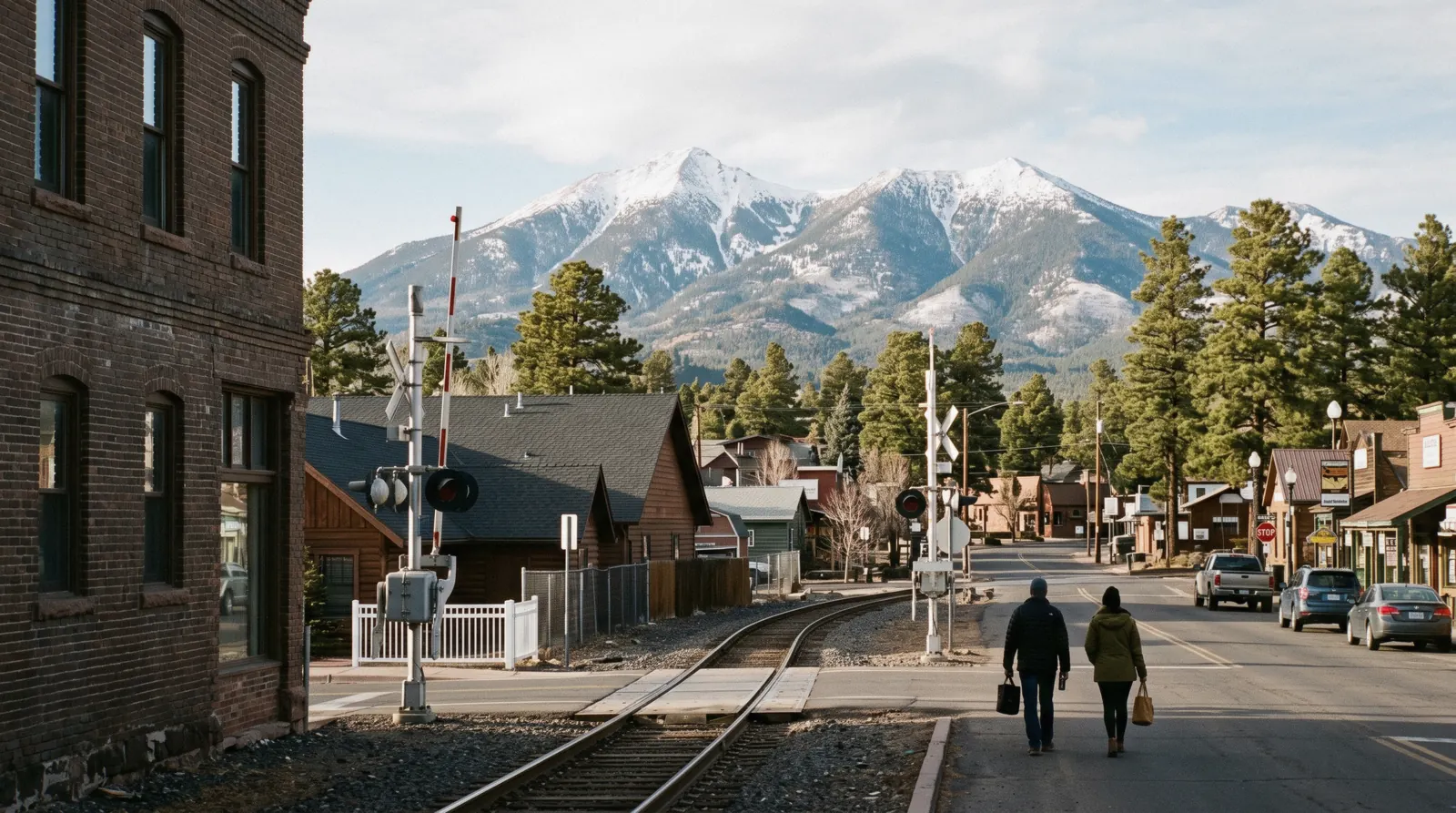
Flagstaff from Sedona
Flagstaff from Sedona is about an hour up SR-89A through Oak Creek Canyon, and it is worth the drive mostly for what Sedona does not have: an observatory, three fee-charging national monuments, a ponderosa pine forest and, in winter, snow. This page covers the drive up Oak Creek Canyon, the roughly 2,500 extra feet of elevation that changes the weather, Lowell Observatory, the three national monuments nearby, and Arizona Snowbowl. If you're weighing Flagstaff against Sedona as a place to stay, the full comparison is on Sedona or Flagstaff: which to book; this page covers the day trip, not the lodging decision. The homepage's own breakdown of what deserves a day away from Sedona covers where Flagstaff fits against the rest.
Quick answer Drive time, what's up there, and what it costs, in three lines
Flagstaff sits roughly an hour from Sedona over SR-89A through Oak Creek Canyon, at about 7,000 feet, roughly 2,500 feet higher than Sedona, which is why it carries a pine forest and winter snow that Sedona's red rocks do not.
Key takeaways
- Lowell Observatory is the single most-visited paid stop, $35 for an adult, open daily except Tuesday evenings from noon to 10 p.m.
- Three national monuments sit within a short drive of town: Walnut Canyon, Sunset Crater and Wupatki, each $25 per vehicle or covered by one combined pass for the last two
- The Grand Canyon day tours that depart from Sedona or Flagstaff both use this same road, so a Flagstaff stop can be folded into that trip instead of driven separately
Key facts
Opening hours
| Lowell Observatory, daily except Tuesdays | 12:00–22:00 |
|---|
Closed Lowell Observatory: Tuesdays, Thanksgiving, Christmas Eve, Christmas Day, New Year's Day
Admission
- Adult
- Lowell Observatory $35; Walnut Canyon $25 per vehicle ($15 per person, $20 motorcycle); Sunset Crater + Wupatki combined $25 per vehicle ($15 per person)
- Reduced
- Lowell Observatory child (6-17) $20
- Free
- Lowell Observatory under 5
Planning it
- Time needed
- Not stated officially; our routing: a full day if you add Lowell Observatory and one national monument, a half-day for downtown and one stop
- Book ahead
- Optional — walk-up usually fine
- Address
- Flagstaff, Coconino County, Arizona; Lowell Observatory at 1400 W. Mars Hill Road
What it costs to add Flagstaff's sights to the day
Flagstaff's fee-charging attractions are run by three different official bodies with three different tickets, all checked on their own sites on 9 September 2026: Lowell Observatory is privately run, and Walnut Canyon, Sunset Crater Volcano and Wupatki are National Park Service units.
Are you going for the observatory at night, or the national monuments by day?
| Site | Fee | What it covers | Hours | Book |
|---|---|---|---|---|
| Lowell ObservatoryAn evening stop; the telescopes and planetarium shows are the draw | $35 adult / $20 ages 6-17 / free under 5 | Guided tours, 150+ exhibits, historic buildings, theater shows, stargazing, all-day re-entry | Daily except Tuesdays, 12:00 p.m.-10:00 p.m. | Official site |
| Walnut Canyon National MonumentA short cliff-dwelling walk; the shortest of the three monuments | $25 per vehicle / $15 per person / $20 motorcycle | Island Trail cliff-dwelling loop, rim overlook, visitor center | Not stated on the fee page; check nps.gov/waca before visiting | Official site |
| Sunset Crater Volcano + Wupatki (combined pass)Volcanic cinder-cone scenery and the Wupatki pueblo ruins in one loop | $25 per vehicle / $15 per person, valid 1-7 days at both | Cinder cone trail and lava flow at Sunset Crater, ancestral Puebloan ruins at Wupatki | Not stated on the fee page; check nps.gov/sucr before visiting | Official site |
A $45 annual pass covers Walnut Canyon, Sunset Crater and Wupatki together, worth it if you plan to add all three in one trip or return within the year.
Tours that use Flagstaff as a stop, not a destination
No product in our catalogue tours Flagstaff's own sights; the Flagstaff-relevant tours are Grand Canyon and Antelope Canyon day trips that offer pickup from Flagstaff as well as Sedona, which is useful if you're staying up here rather than down in the valley.
 from $191.14
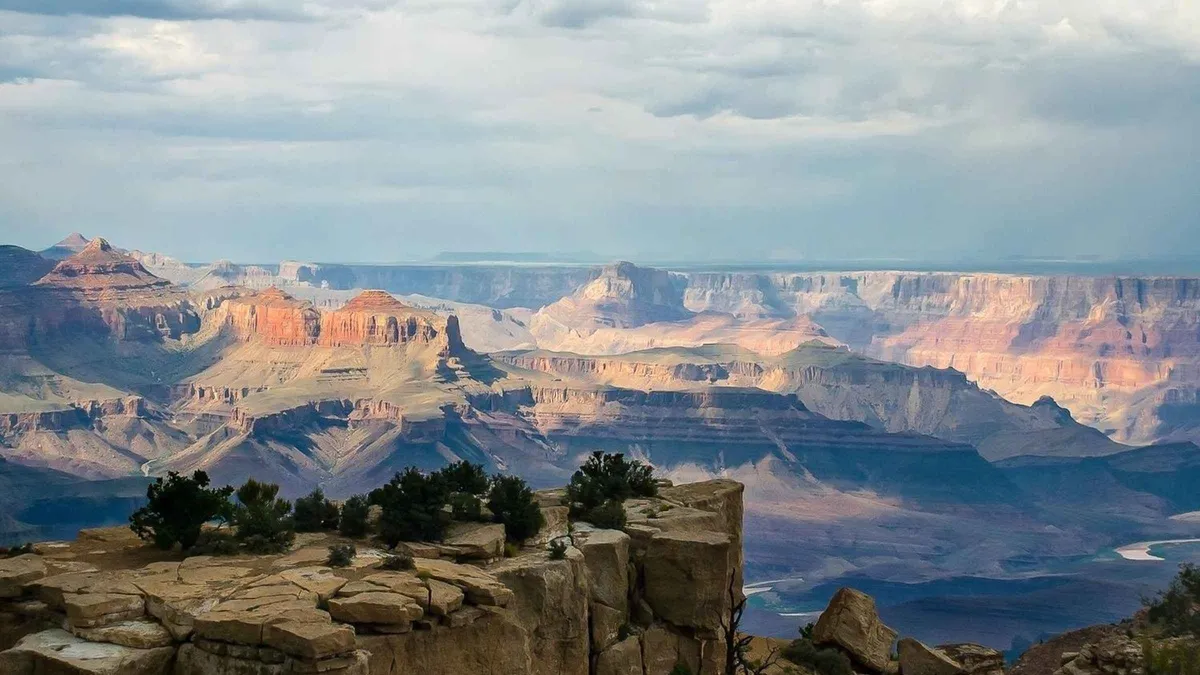
From Sedona or Flagstaff: Grand Canyon Full-Day Tour
A fully narrated 10-hour day trip along the South Rim with departure options from either Sedona or Flagstaff. Suits travelers staying in either town who want one guide covering both the geology and history of the canyon.
Check Availability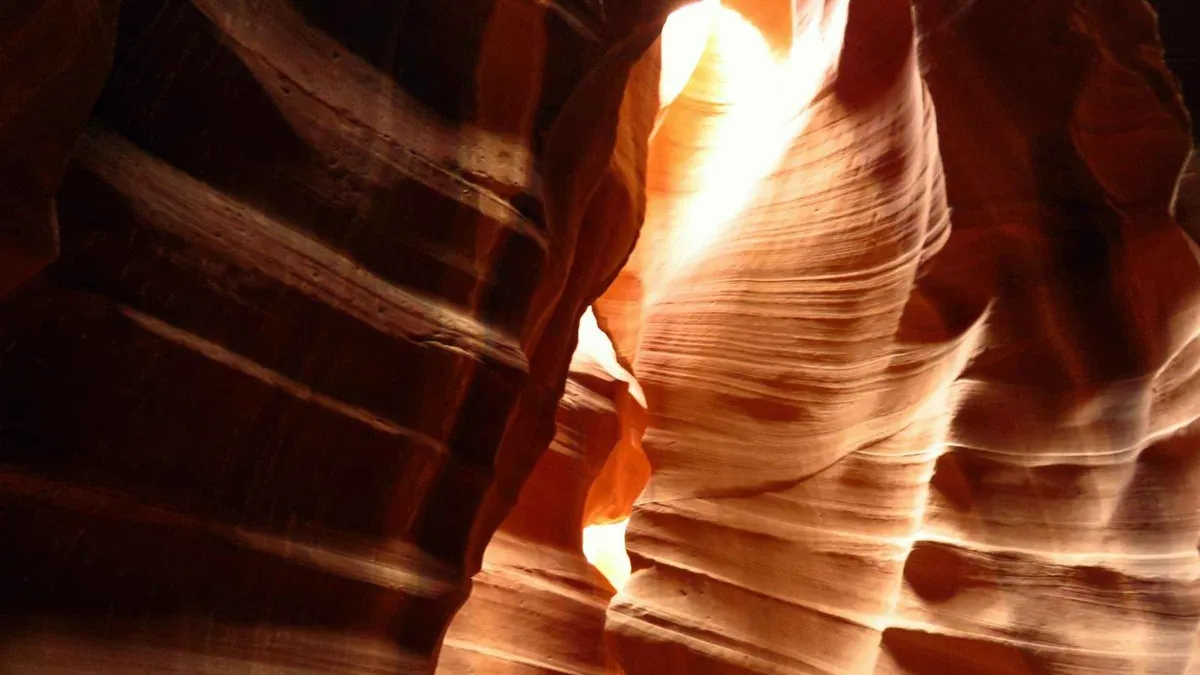 from $311.97
From Flagstaff or Sedona: Antelope Canyon Full-Day Tour
A full-day Antelope Canyon trip from Flagstaff or Sedona built around the water-carved slot canyon's light and color rather than a multi-stop itinerary. Suits travelers who want Antelope Canyon as the single focus of the day.
Check Availability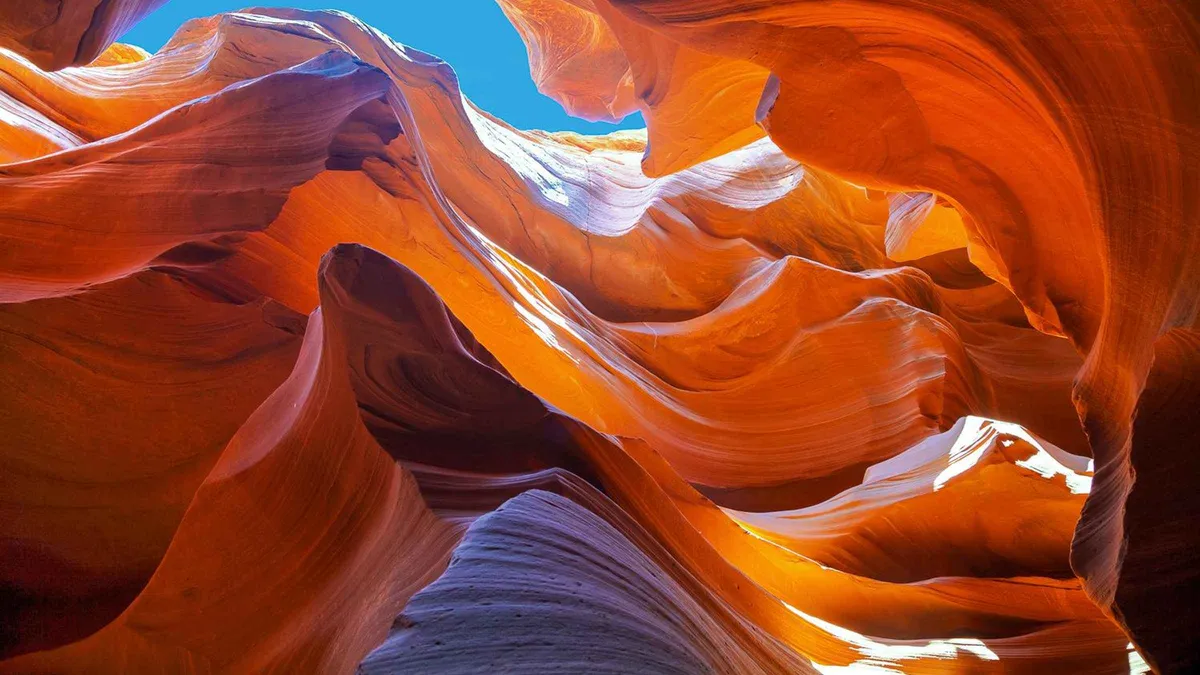 from $311.97
Most-reviewed Antelope Canyon-area tour on this page (380 reviews)
from $311.97
Most-reviewed Antelope Canyon-area tour on this page (380 reviews) Sedona or Flagstaff: Horseshoe Bend & Antelope Canyon X Tour
A 12-hour day combining Canyon X (an Antelope Canyon-style slot canyon), Horseshoe Bend, Lake Powell and Glen Canyon Dam in one guided van route. Suits travelers who want the broadest single-day sweep of the Page-area sights.
Check AvailabilityPrices, ratings and details are the platform's own, checked in Q3 2026; dollar figures are the listed prices — the platform bills in your account's currency.
The drive up: SR-89A through Oak Creek Canyon
One road, one canyon, and a figure from the tourism bureau rather than a government agency.
Discover Flagstaff, the city's own tourism bureau, states the drive "takes about an hour without stops" over SR-89A through Oak Creek Canyon, though it also notes that turning the trip into a half-day or longer lets you stop for the switchbacks, the Oak Creek Vista Overlook and the canyon's picnic areas. No Coconino County, ADOT or City of Flagstaff government page independently states a mileage or drive time for this specific leg, so treat the bureau's roughly-an-hour figure as the best available estimate rather than an agency-verified one.
The road itself climbs out of the canyon in a series of tight switchbacks before leveling out onto the Coconino Plateau, and the elevation gain from Sedona to the canyon rim alone runs into the thousands of feet. Traffic backs up behind slower vehicles on the switchback section in particular; there is no passing lane through most of the canyon, so a summer weekend afternoon can stretch the trip well past the bureau's hour estimate.
Flagstaff's elevation, and why it matters
The extra elevation is the whole reason to make the trip.
Discover Flagstaff, the city's official tourism bureau, puts the city's altitude at about 7,000 feet (2,134 m). Sedona's own elevation has no single confirmed government figure (Visit Sedona, the city's tourism arm, cites about 4,500 feet), which puts Flagstaff somewhere around 2,500 feet higher. That difference is why Flagstaff sits inside the largest contiguous ponderosa pine forest in the world rather than red-rock desert, why summer afternoons there run noticeably cooler than Sedona's, and why Flagstaff gets real winter snow while Sedona rarely holds it on the ground for more than a day or two.
Lowell Observatory
The single paid attraction most day-trippers build the visit around.
Lowell Observatory is open daily except Tuesdays, noon to 10 p.m., with admission covering guided tours, more than 150 exhibits, the historic domes, Lowell Universe Theater programming and stargazing, valid all day with re-entry. Adult admission is $35, ages 6 to 17 are $20, and children under 5 are free; the rooftop Dark Sky Planetarium show and the Lowell Universe Theater show are $5 add-ons each. Because most of the draw here is after-dark viewing through the telescopes, an observatory stop pairs naturally with an overnight in Flagstaff rather than a same-day round trip from Sedona, unless you plan the drive back down Oak Creek Canyon after dark, which is a road best not rushed.
Walnut Canyon, Sunset Crater and Wupatki: the three monuments Sedona doesn't have
Walnut Canyon, Sunset Crater and Wupatki sit within a short drive of Flagstaff and cover three different kinds of landscape.
Walnut Canyon National Monument centers on the Island Trail, a loop past cliff dwellings built into the canyon walls, priced at $25 per vehicle, $15 per person or $20 for a motorcycle. It is the shortest and closest of the three to town, a stop that fits into an hour or two without reshaping the rest of the day.
Sunset Crater Volcano and Wupatki National Monuments sit along the same road loop north of town and share a single $25 vehicle pass valid for one to seven days at both. Sunset Crater is a young volcanic cinder cone with a trail through the surrounding lava flow, black and cratered against the pine forest around it; Wupatki holds ancestral Puebloan pueblo ruins on the open grassland beyond the crater, a genuinely different landscape from the volcanic terrain a few miles back. A $45 annual pass covers all three, Walnut Canyon, Sunset Crater and Wupatki together, which is worth it if a return trip within the year is likely.
Snow and Arizona Snowbowl
The one thing on this page Sedona genuinely cannot offer at any price.
Arizona Snowbowl, on the San Francisco Peaks above Flagstaff, does not publish exact opening and closing dates for its ski season on its own site as of this check; the site instead runs a countdown to the coming season's opening rather than printing calendar dates outright, so check snowbowl.ski directly before planning a ski day around it. In summer, the resort's scenic chairlift runs on weekends, with the site explicitly confirming it operates weekends through September. Either way, Snowbowl is a genuinely different experience from anything in the Sedona area, chairlift views over the Colorado Plateau in summer, actual snow sport in winter, at an elevation Sedona's red rocks never reach.
The peaks themselves sit well above Flagstaff's own 7,000-foot elevation, which is part of why the town gets snow reliably in years when Sedona, an hour and roughly 2,500 feet lower, sees none at all. A traveler chasing snow photos on a Sedona trip in December or January is better served driving up here than waiting for it in the red rocks.
Flagstaff as a base, and the Grand Canyon question
Two questions that come up on every Flagstaff search, both belonging to other pages here.
Whether Flagstaff or Sedona is the nicer town, or the better base for a red-rock trip, is a longer argument than a day-trip page can settle fairly; the full comparison, covering lodging cost, drive times and what each town is actually like to stay in, is on Sedona or Flagstaff: which to book.
On distance to the Grand Canyon: the National Park Service's own directions from Sedona route through Flagstaff, then west on I-40 to Williams before turning north on Highway 64 to the South Entrance, a 119-mile drive in total. Because Flagstaff sits partway along that same route, it is measurably closer to the Grand Canyon than Sedona is, though the NPS does not publish a separate Flagstaff-to-South-Rim mileage figure to quote directly. The full Sedona-to-Grand-Canyon routing, including the drive time reality in summer traffic, is on the Grand Canyon from Sedona page.
One more question worth clearing up here since it surfaces in the same searches: whether yellow signage is banned in Sedona is a Sedona question, not a Flagstaff one, and this page's brief covers the drive up to Flagstaff rather than Sedona's own sign code. The city's own planning department, not this guide, is the source for that rule.
Flagstaff map: the drive and the monuments loop
Lowell Observatory sits above downtown; the three national monuments form a loop north and east of town.
Next stop from Flagstaff
Flagstaff sits on the road to two other day trips this guide covers.
Grand Canyon South Rim
The Grand Canyon from Sedona page routes through Flagstaff on the way; if you're already up here, the South Rim is the natural next leg rather than a separate trip from Sedona.
Continue west on I-40, then north on Highway 64Antelope Canyon and Page
Antelope Canyon tours often list Flagstaff as an alternate pickup alongside Sedona, since the drive north on US-89 starts from here.
North on US-89 from FlagstaffFlagstaff from Sedona questions
How far is Flagstaff from Sedona?
No government agency publishes an official mileage or drive-time figure for this specific route. Discover Flagstaff, the city's own tourism bureau, states the drive takes "about an hour without stops" over SR-89A through Oak Creek Canyon; budget more on a summer weekend when the switchback section slows to a crawl behind sightseers.
Is the drive from Flagstaff to Sedona scenic?
Yes. The route runs through Oak Creek Canyon on SR-89A, descending (or climbing, depending on direction) through a series of switchbacks past red-rock walls, with the Oak Creek Vista Overlook near the canyon rim as the signature stop. It is one of the more scenic short drives in Arizona, and also one of the slower ones because of that same terrain.
What is the best time of day to make the Flagstaff to Sedona drive?
Early morning or late afternoon avoids the worst of the summer weekend traffic that backs up behind slower vehicles on the switchback section. Driving after dark is not recommended on the canyon stretch given the tight curves and limited passing room; if Lowell Observatory's evening programming is the plan, allow extra time for the descent back to Sedona.
Do I need a car to visit Flagstaff from Sedona?
There is no scheduled public transit between Sedona and Flagstaff; the only scheduled option is Groome Transportation's seasonal shuttle to and from Flagstaff Pulliam Airport (FLG), which runs March through October and requires an advance reservation, with fares starting at $61. Outside a rental car or that seasonal shuttle, the trip is a drive.
Can I see the Grand Canyon on the same day as Flagstaff?
Yes, and many visitors do exactly that: the Grand Canyon South Rim sits further along the same I-40-then-Highway-64 route the National Park Service directs Sedona traffic through Flagstaff to reach, so a Flagstaff stop can be folded into a longer Grand Canyon day rather than treated as a separate trip.
Does it snow in Flagstaff when it doesn't in Sedona?
Yes, regularly. Flagstaff sits roughly 2,500 feet higher than Sedona, based on the tourism bureau's own altitude figures for each city, and that elevation difference is why Flagstaff holds real winter snow and has its own ski area, Arizona Snowbowl, while Sedona's red rocks rarely keep snow on the ground for more than a day or two.
Flagstaff and the Drive from Sedona on Film
Three looks at the Oak Creek Canyon drive and what Flagstaff itself offers once you're up there.
Flagstaff Arizona Day Trip | Hidden Gems & Things To Do 2026
A tour of downtown Flagstaff's own sights beyond the drive up.
Video: Living in Arizona NowSedona to Flagstaff Arizona 4K HDR
The SR-89A drive north through Oak Creek Canyon toward Flagstaff.
Video: NedFlagstaff, Arizona to Sedona, Arizona! Drive with me!
The same route driven in the opposite direction, back down into the canyon.
Video: Decelerated TravelVideos load from YouTube only when you press play.
Reviewed Q3 2026 (July–September 2026); next review Q4 2026. Prices, hours and terms are set by the venue or operator and confirmed at checkout.
We may earn a commission if you book through one of our links, at no extra cost to you. Full affiliate disclosure