 Sedona City Guide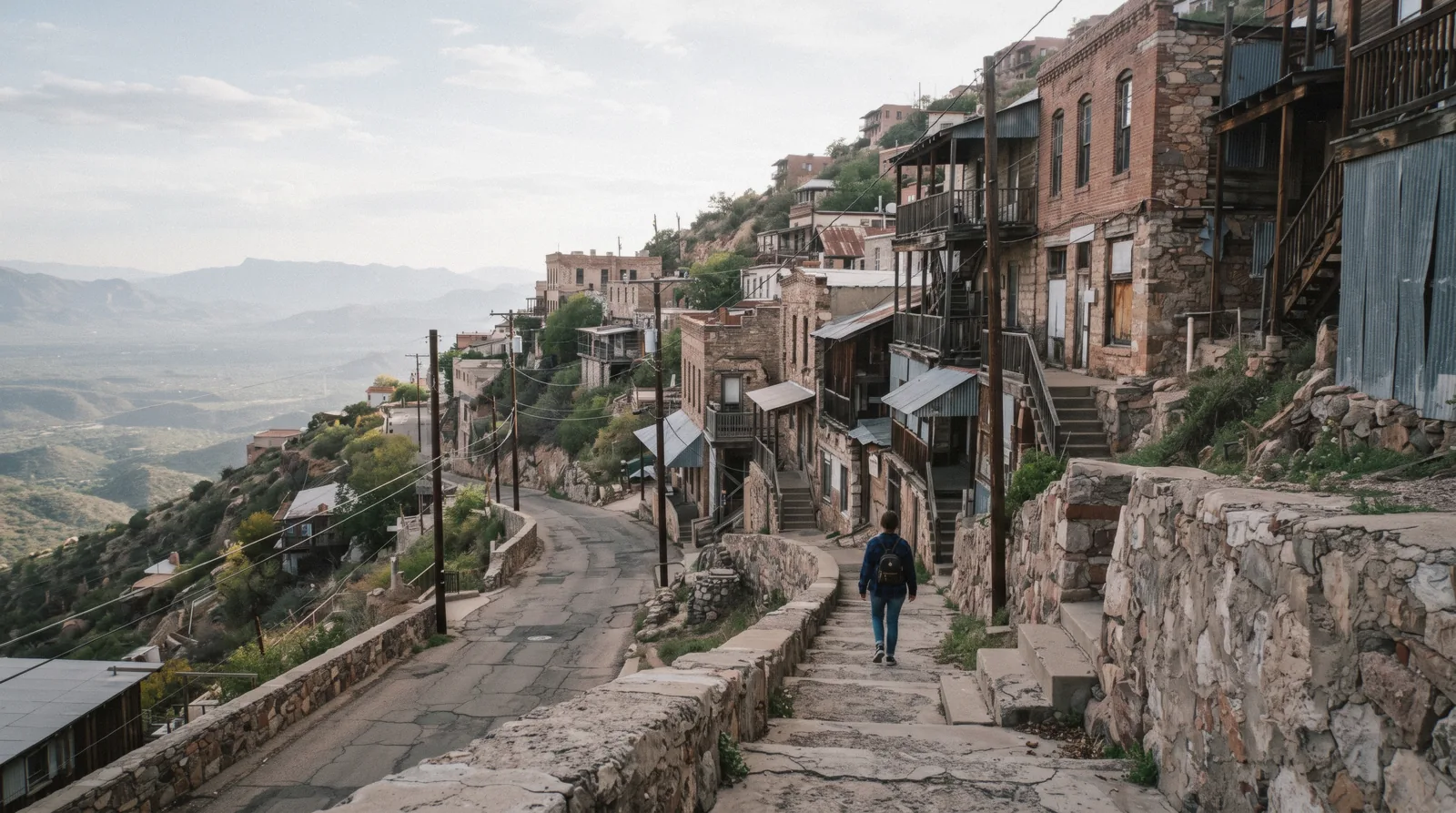
Jerome, Arizona
Jerome, Arizona is a former copper camp stacked on the side of Cleopatra Hill above the Verde Valley, about a 45 to 50 minute drive from Sedona by our estimate (no official page states the exact time). This page covers the drive over SR-89A, where you actually park once you get there, the Jerome State Historic Park fee and hours, the Audrey headframe, the mine-tour options, and the honest note that most of the town today is shops and bars rather than a museum. It pairs naturally with the Verde Valley wine tours below it, and with a stop at the Verde Canyon Railroad depot in nearby Clarkdale. How a Verde Valley day trades off against time spent in Sedona itself is covered on the homepage.
Quick answer Drive time, parking, the park fee and what's actually there, in three lines
Jerome is a former copper-mining camp built into the 30-plus-degree slope of Cleopatra Hill, reached from Sedona by SR-89A through Cottonwood; the only paid attraction with a published fee is Jerome State Historic Park at $10 for adults.
Key takeaways
- The drive is our estimate at roughly 30 to 35 miles and 45 to 50 minutes; no official Sedona or Jerome page states a mileage or time, so budget extra for the climb and the parking search
- Parking is tight on the one-way hill road through town; Jerome State Historic Park has its own small lot, and the Douglas Mansion museum inside it is the only fixed-fee stop
- Most of what fills a Jerome afternoon is free: galleries, bars and viewpoints over the Verde Valley; pair the day with a Verde Valley wine tour that starts near Cottonwood on the way up
Key facts
Opening hours
| Jerome State Historic Park, daily, all year | 09:00–16:30 |
|---|---|
| Thanksgiving and Christmas Eve | 10:00–14:00 |
Closed Christmas Day; shortened hours Thanksgiving and Christmas Eve
Admission
- Adult
- $10 (Jerome State Historic Park, age 14+); the town itself is free to walk
- Reduced
- $5 youth age 7-13
- Free
- Under 7; and the streets, shops and viewpoints of the town, which charge nothing to enter
Planning it
- Time needed
- Not stated by any official source; our routing: 45 minutes to an hour for the Douglas Mansion museum, 2 to 3 hours if you add the town's shops and a mine tour
- Book ahead
- Optional — walk-up usually fine
- Address
- Jerome State Historic Park, 100 Douglas Road, Jerome, AZ 86331
What it costs to see Jerome
Jerome itself has no admission fee and no gate; the one line item with a published price is Jerome State Historic Park's own museum, checked on azstateparks.com on 9 September 2026. Everything else in town is a business you choose to spend money in, not an entry cost.
Are you paying to walk the town, or to go inside the museum?
| Option | Price | Includes | Hours | Book |
|---|---|---|---|---|
| Jerome State Historic ParkAnyone who wants the Douglas Mansion museum, the mine model and the Audrey headframe view | $10 adult / $5 ages 7-13 / free under 7 | Douglas Mansion museum, video presentations, 3-D underground mine model, picnic area, Audrey Headframe access | 9:00 a.m.-4:30 p.m. daily (shortened Thanksgiving and Christmas Eve, closed Christmas Day) | Official site |
Walking Main Street, browsing the galleries and stopping at a viewpoint cost nothing. A privately run mine-and-ghost-town attraction also operates above the historic district; its current hours and admission are not fixed by any state or town authority this guide cites, so check its own listing before you build it into the day.
The closest bookable day trips to Jerome
No GetYourGuide product tours Jerome on its own; the nearest bookable options in our catalogue are Verde Valley wine tours that depart from the Sedona and Cottonwood area on the same road up to Jerome, so pairing one with a self-guided stop in town is the practical way to book part of the day.
 from $109
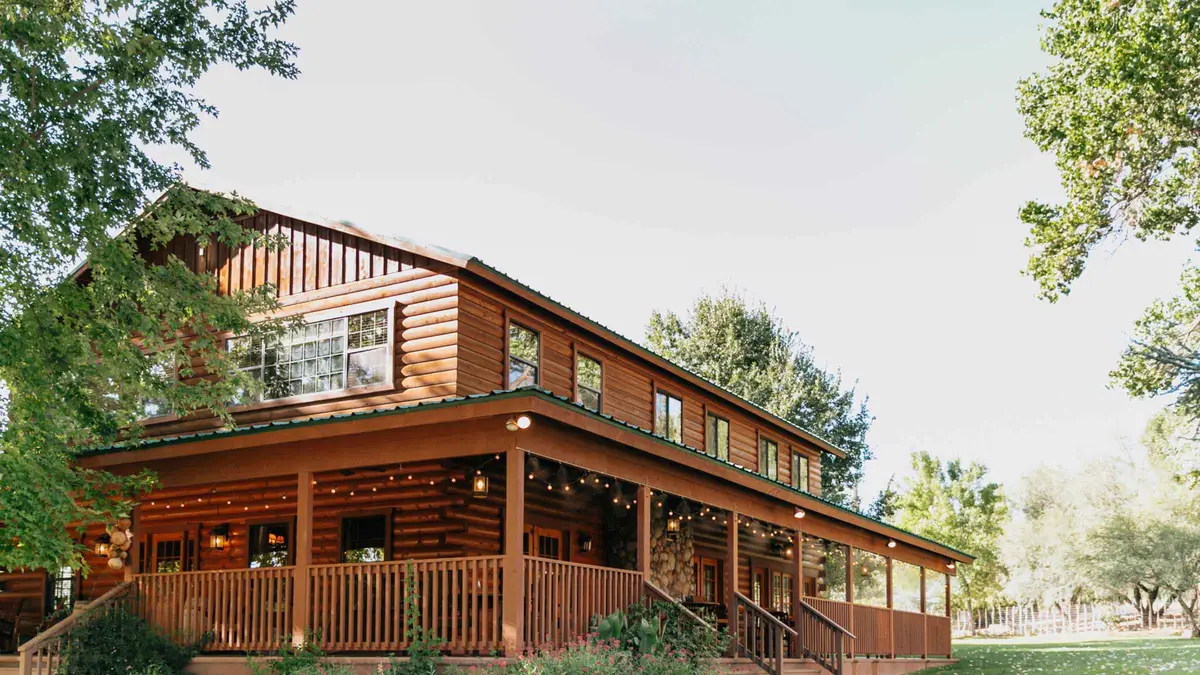
Sedona: Visit 4 Award Winning Vineyards in the Verde Valley
A 5.5-hour run to four award-winning Verde Valley wineries with a picnic lunch included, aimed at travelers who want several tastings without driving themselves. Suits wine-focused groups more than a quick single-stop tasting.
Check Availability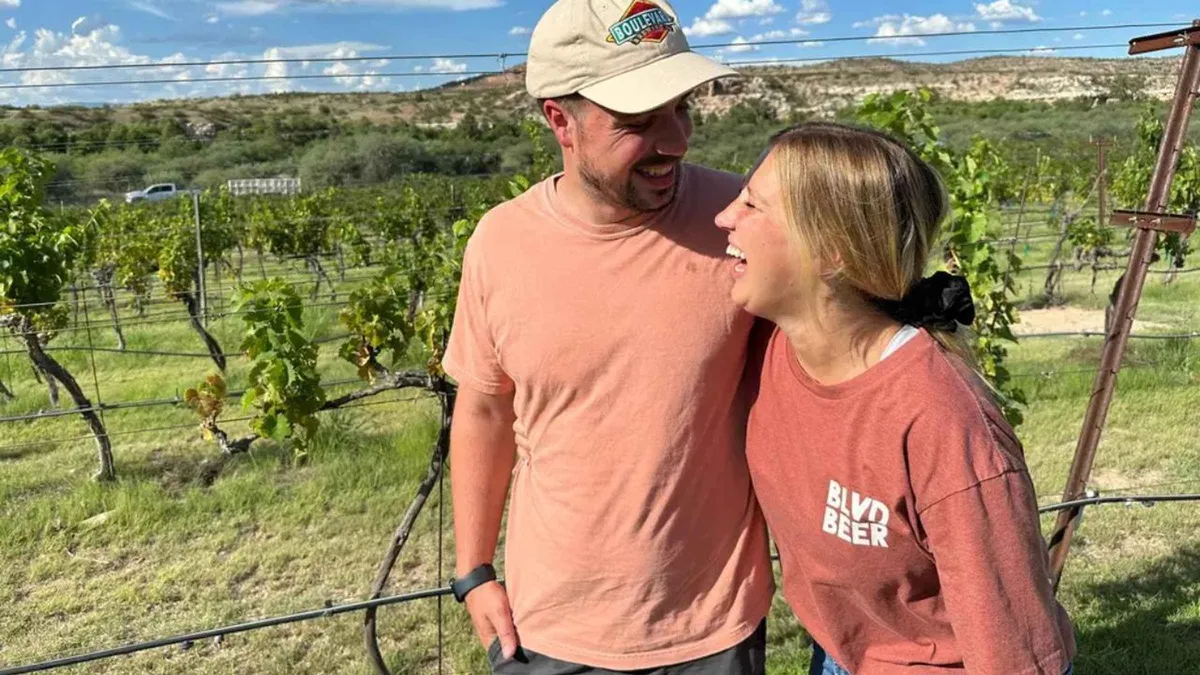 from $106.20
Sedona: Verde Valley Wine Tour with Pickup and Drop-off
A flexible 3-to-8-hour wine run through Cornville, Cottonwood and Clarkdale with door-to-door pickup, where each traveler pays tasting fees directly at the wineries visited. Suits groups who want to control which flights they pay for rather than a bundled package. A new listing on GetYourGuide with no reviews yet.
Check AvailabilityPrices, ratings and details are the platform's own, checked in Q3 2026; dollar figures are the listed prices — the platform bills in your account's currency.
Driving up SR-89A from Sedona
The route is well documented; the time from Sedona is not.
Jerome's own municipal government describes the town as sitting "approximately 100 miles north of Phoenix and 45 miles southwest of Flagstaff on Highway 89A" (jerome.az.gov), which is the only official mileage figure published for the town's location. No Jerome or Sedona government page states a Sedona-to-Jerome mileage or driving time. The road itself is not in question: SR-89A runs southwest out of Sedona through Cottonwood, then climbs the switchbacks up Cleopatra Hill into town, the same route the Verde Canyon Railroad's own directions page uses for its Sedona-to-Clarkdale leg, with Jerome sitting 5 miles further up the hill from Clarkdale.
Commonly repeated estimates put the drive at roughly 30 to 35 miles and 45 to 50 minutes, but that figure traces back to unofficial road-trip sites, not a government source, so treat it as a planning range rather than a promise. Add time for the climb itself: the final approach into Jerome switches back repeatedly up the hillside, and a line of RVs or a slow driver ahead can stretch the last few miles considerably longer than the flat-road math suggests.
Parking in Jerome
This is the question every visitor asks and no official page fully answers.
Jerome's town government references a "Parking and Shuttle Service" page and an online system for residents to pay parking tickets, which confirms the town actively manages and enforces parking, but its own website does not publish a visitor lot capacity, a fee schedule, or a map of where out-of-towners should leave their car. What is confirmed: the town is built on a steep hillside along a narrow, one-way loop of Highway 89A through the historic district, and street parking along that loop is limited to whatever the shoulder and a handful of small pull-offs allow.
Jerome State Historic Park has its own small parking area at 100 Douglas Road, separate from the town's Main Street lots, so arriving directly at the park rather than circling the business district first is the more reliable way to get a space near the museum. On a busy Saturday, expect to walk from wherever you find a spot; the honest plan is to allow extra time for the search rather than a guaranteed close-in space, since no authority publishes a lot count or an occupancy figure for either the town or the park.
What Jerome actually is: a copper camp on a 30-degree hillside
The history is well documented by the town's own government; the present-day experience is mostly commerce, not a museum.
Jerome's mining claims were first located in 1875, and Frederick Tritle's United Verde Copper Company organized them into a working camp named for Eugene Jerome, a New York financier who backed the venture and never visited. Early production ran through 1883 and 1884 before the operation closed in 1887; William Clark revived the business in 1888, and the boom that followed brought settlers from more than 30 nationalities. The town incorporated in 1899 specifically to establish a fire district and a building code, a response to the fire risk of a densely built wooden mining camp (jerome.az.gov).
At its peak in the early 1900s, Jerome housed nearly 15,000 people. Major mining activity ceased in 1953, and the population collapsed to under 100 by the late 1950s; the 2010 census counted about 444 residents, and that scale, a few hundred people in a town built for thousands, is why Jerome carries the "ghost town" label even though it is incorporated, inhabited and, on a weekend afternoon, busy with visitors rather than empty.
The instability that shaped the town is also documented officially: "severe slides plagued Jerome and caused extensive damage," the result of blasting operations that ranged from 5,000 to over 200,000 pounds of explosives once the high-grade ore near the surface was exhausted and open-pit mining began. That history of ground movement is why so many Jerome buildings sit at odd angles or show visible structural repair, and it is part of what the Jerome State Historic Park museum explains in more depth than a walk down Main Street does on its own.
Inside Jerome State Historic Park: the Douglas Mansion
The one fixed-fee stop in town, and the one place that actually explains the mines under your feet.
The Douglas Mansion opened in 1916 as the residence of James S. Douglas, built above his Little Daisy Mine. It now holds the park's museum: photographs, artifacts and mineral specimens, video presentations on the mining operation, and a 3-D scale model of the underground workings that runs beneath the town, which is the clearest way to grasp why the hillside above kept sliding. Outside, an exhibit area and a picnic ground look out over the Verde Valley, and the grounds include access to the Audrey Headframe, the surface structure over the mine shaft that is one of the few pieces of mining infrastructure still standing where it worked.
The park also runs scheduled programming beyond the static exhibits: historical walking tours on Saturdays from 10 to 11 a.m., geology tours on Sundays, occasional bat walks, and an October "Flashfright" evening tour built around the town's ghost-town reputation. None of these carry a published add-on fee beyond general admission as of this check, but confirm current scheduling on the park's own site before building a day around a specific tour slot.
Mine tours beyond the state park
Jerome has more than one operator using the word "mine," and they are not the same thing.
Jerome State Historic Park's own "mine tour" is the 3-D model and video presentation inside the Douglas Mansion, not a walk into an actual shaft; it explains the underground workings without taking you underground. A separately operated, privately run mine-and-ghost-town attraction sits above the historic district and advertises walk-through exhibits and a small zoo alongside its mine displays. No town, county or state page this guide cites publishes that operator's hours, admission price, or safety certification, so this page does not repeat a figure for it.
If a mine walk-through matters to your day, check that operator's own current listing rather than a blog's older price.
Altitude, wind and what to wear
Jerome sits noticeably higher and more exposed than Sedona.
Jerome's own government describes the town as sitting "perched on a hillside at an elevation of over 5,000 feet in the Black Hills of Arizona" (jerome.az.gov); no single precise figure beyond "over 5,000 feet" is published on an official page, so this guide does not repeat a more exact number. That is several hundred feet above Sedona's own elevation (Sedona's official figure is likewise unpublished; Visit Sedona, the city's tourism bureau, states about 4,500 feet), and the hillside setting means Jerome catches more wind than the valley towns below it. A layer that is unnecessary at street level in Sedona is often welcome on Jerome's exposed switchback streets, especially in the shoulder seasons.
What fills the rest of the day: shops and bars, not a museum
The honest expectation, stated plainly.
Outside the state park, Jerome today is mostly a commercial district: art galleries, wine-tasting rooms, boutique shops and a handful of bars occupy the historic storefronts along the one-way loop of Main Street. That is not a criticism; it is what the town's economy has become since the mines closed, and it is a genuinely pleasant afternoon of browsing on a hillside with views over the Verde Valley. But a visitor expecting a museum town from end to end, or a ghost town with nothing standing in it, should recalibrate: the only formally curated history exhibit is inside Jerome State Historic Park, and everywhere else in town is a place doing business, not an interpretive site.
Jerome map: the park, the town loop and the drive up
The state historic park sits at the edge of the historic district; the town's shops and bars line the switchback loop above it.
Next stop from Jerome
Jerome sits between Sedona and two other stops most day trips combine it with.
Verde Canyon Railroad
The Verde Canyon Railroad depot in Clarkdale sits at the base of the same hill Jerome climbs; the railroad's own directions page places Jerome 5 miles from the Clarkdale station, making the two an easy same-day pairing if the train's departure time lines up with your visit.
About 5 miles down the hill in ClarkdaleVerde Valley wine tasting rooms
The wine tours page covers the tasting rooms and vineyards strung along the Cottonwood-to-Clarkdale corridor you drive through on the way up to Jerome, several of them a short detour off SR-89A.
Along the same SR-89A corridor through CottonwoodTuzigoot National Monument
Tuzigoot sits just off the same road between Cottonwood and Clarkdale, a hilltop pueblo ruin that pairs naturally with a Jerome and Verde Valley day.
A short drive off SR-89A near ClarkdaleJerome, Arizona questions
What is special about Jerome, Arizona?
Jerome is a former copper-mining camp built directly onto the slope of Cleopatra Hill, where blasting-driven landslides through the early 20th century left buildings tilted and cracked; the town incorporated in 1899, boomed to nearly 15,000 residents, and then collapsed to under 100 people after major mining ceased in 1953. That boom-to-ghost-town arc, still visible in the historic district today, is what draws the day trip from Sedona rather than any single sight. Jerome State Historic Park is where the fuller story is told.
What famous person lives in Jerome, Arizona?
No official town or state page names a current celebrity resident of Jerome, so this guide does not repeat that claim. The town's own government page focuses on its mining and fire-safety history rather than notable current residents; treat any specific name circulating online as unverified until Jerome's own site confirms it.
What happened to Jerome Arizona?
Jerome's population peaked near 15,000 during the early-1900s copper boom, then major mining activity ceased in 1953 and the population fell to under 100 by the late 1950s as the mines closed and residents left. The town avoided becoming a true abandoned ghost town by shifting to tourism and small business; the 2010 census counted about 444 residents. Jerome State Historic Park covers the mining collapse in more depth.
Is it worth going to Jerome, Arizona?
For a half-day add-on to a Sedona trip, yes: the drive up SR-89A, the hillside town itself and the $10 state historic park museum together make a reasonable few hours, especially paired with a Verde Valley wine stop or the Verde Canyon Railroad in nearby Clarkdale. Go in expecting a shopping-and-viewpoint afternoon with one real museum, not a full day of curated history.
Is a Forest Service parking permit required to visit Jerome?
No. The national forest recreation pass that covers Coconino National Forest trailheads and picnic areas around Sedona is not required to drive to, walk around, or park in the town of Jerome, and it is not accepted at Jerome State Historic Park, which charges its own separate $10 adult admission.
How long does the drive from Sedona to Jerome take?
No official Sedona or Jerome government page publishes a mileage or driving time between the two. Commonly cited estimates put it at roughly 30 to 35 miles and 45 to 50 minutes over SR-89A through Cottonwood and up the hillside switchbacks; treat that as a planning range, not a confirmed figure, and budget extra time for the climb into town.
Where Jerome fits in a Sedona day trip
The town works best as a half-day slice of a longer Verde Valley loop, not a destination on its own.
Because there is one fixed-fee attraction in Jerome and the rest of the town is retail, most visitors treat it as a stop rather than the whole day: drive up SR-89A from Sedona, spend an hour or two at Jerome State Historic Park and along Main Street, then continue down the hill to Clarkdale for the Verde Canyon Railroad or a Verde Valley wine tasting before heading back. That loop, Sedona to Jerome to Clarkdale and back, is a full but manageable day without the drive time of a Grand Canyon or Flagstaff trip, and it does not require booking anything beyond the wine tour or train ticket you choose to add.
Jerome, Arizona on Film
Three ground-level looks at the town's hillside streets and history before you drive up SR-89A yourself.
Jerome Arizona Ghost Town Tour
A walk-through tour of Jerome's historic district and its hillside storefronts.
Video: Living in Arizona NowThe REAL Story Of The WICKEDEST Town In The West
The boom-town history behind Jerome's copper-mining past and its reputation.
Video: Old Lost MinesThe Sliding Town of Jerome, Arizona | Things To Do In Arizona
A closer look at the landslide history that shaped the town's tilted buildings.
Video: Road Trip InsightsVideos load from YouTube only when you press play.
Reviewed Q3 2026 (July–September 2026); next review Q4 2026. Prices, hours and terms are set by the venue or operator and confirmed at checkout.
We may earn a commission if you book through one of our links, at no extra cost to you. Full affiliate disclosure