 Sedona City Guide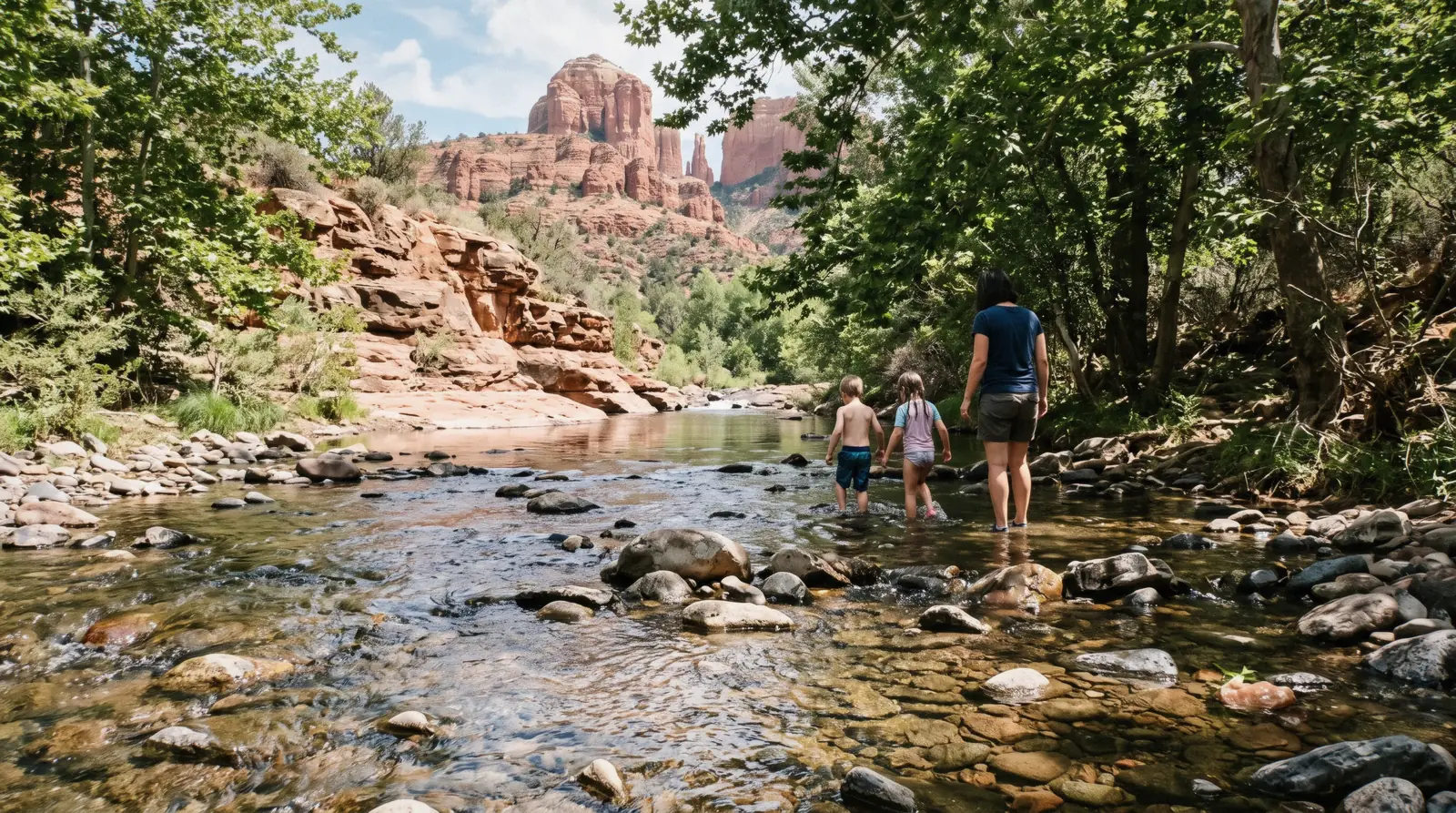
Sedona with Kids: Which Trails, Sights and Tours Actually Work
Sedona with kids means being selective about the trail list: it reads as a hiking town first, and most of what shows up on a "best hikes" list is not built for a six-year-old. This page sorts the same trail inventory the rest of this guide covers by what a child can actually do on it: the flat walk, the creek with the crossings, the short mesa climb, the swim hole with its own well-documented hazards, and the handful of trails worth skipping until the kids are older. Fees, hours and trail figures below come from Coconino National Forest's own trail pages and Arizona State Parks' facility page, read in Q3 2026; tour age limits are the operators' own listed restrictions, not a guess. For the rest of the trip beyond this one day, see the guide to planning the rest of the trip.
Quick answer The flat trail, the swim stop, and the two to skip
The easiest win with kids is the Bell Rock Pathway: a wide, mostly flat surface with only 185 feet of elevation change over 3.5 miles, so you can turn back at any point. For water play, Slide Rock State Park is the obvious draw, but it is a real rock chute with a documented injury pattern, not a padded water park. Save Cathedral Rock and the shorter approaches to Devil's Bridge for older kids; both involve exposed rock with real fall consequences.
Key takeaways
- For a stroller-friendly morning, Bell Rock Pathway beats every other named trail in this guide on flatness alone.
- Slide Rock costs $30 per vehicle through August 21, 2026 (dropping to $20 after) and the swim area shuts an hour before the park gate.
- The creek walk at West Fork Trail works for kids who can manage wet feet on stepping stones; the day-use fee is $15 for up to five people.
- None of the jeep tour operators publish a minimum age for a standard tour, but several exclude pregnant travelers and a few exclude wheelchair users, worth reading before you book for a stroller-age child.
Which trails work for kids, at a glance
Distance, elevation change and the Forest Service's own difficulty rating for the trails that come up most often in this guide, from each trail's page on fs.usda.gov, read in Q3 2026.
Read the elevation-change column against the distance, not on its own: 185 feet over 3.5 miles is a gentle grade, while 669 feet over 1.1 miles is a scramble no matter how short the trail sounds on paper.
| Trail | Distance | Elevation change | Forest Service rating | Works for kids |
|---|---|---|---|---|
| Bell Rock Pathway | 3.5 mi one way | 185 ft | Easy | Yes, turn back anytime |
| West Fork Trail, maintained section | 3 mi one way | 221 ft cumulative | Not separately rated; described as easy going with creek crossings | Yes, with wet-shoe tolerance |
| Doe Mountain, mesa-top loop | 1.3 mi roundtrip | 542 ft | Moderately challenging | Older kids only, steady footing needed |
| Cathedral Rock Trail | 1.1 mi roundtrip | 669 ft | Strenuous, more scramble than hike | No, not with small children |
| Devil's Bridge, Dry Creek Road approach | 1.6 mi roundtrip | 371 ft | Moderate | Teens only, exposure at the span itself |
A trail rated Easy by the Forest Service is still a trail, not a sidewalk: expect loose rock, no shade for long stretches and no restroom at most trailheads. The rating measures grade and footing, not whether a four-year-old will want to keep walking after twenty minutes. Bring the wagon or the carrier for Bell Rock; it stays flat enough to use one the whole way.
Slide Rock State Park: the real risks, not just the price
Slide Rock is a natural sandstone chute in Oak Creek, and it is the single most-asked-about kid stop in this guide, so it gets the longest section here. The state park's own fee page prices a vehicle with one to four adults at $30 from May through August 21, 2026, dropping to $20 from August 22 through the following April; each additional adult is $5. Hours run 8:00 am to 6:00 pm from late January through late November, with the entry gate and swim area closing an hour earlier at 5:00 pm, and last entry a further hour before that. The park closes early on Thanksgiving and Christmas Eve and is closed outright on Christmas Day.
What the fee page does not print is a capacity-trigger number: Arizona State Parks does not publish how many vehicles the lot holds before the gate turns cars away on a full day, which this guide has not been able to source from any official page. Budget an early arrival on any weekend from late spring through late summer if a slide run matters to the trip; arriving after 10:00 am on a July Saturday is a real risk of being turned around at the gate with kids already excited for water.
The chute itself is natural rock, not a manufactured flume: the surface is uneven, the water depth changes with runoff, and rangers regularly warn visitors that the slide has caused real injuries, from scrapes to more serious impacts on submerged rock. Water shoes are the one piece of gear worth bringing that most families forget; bare feet on wet sandstone is where most of the minor injuries happen. There is no lifeguard on duty and no posted minimum age for the slide itself, so the judgment about whether a given child is a strong enough swimmer for moving water sits with the parent, not with a rule the park enforces.
When Slide Rock is the wrong call for this trip
- Non-swimmers under about seven, since there is no lifeguard and the current varies with the season's runoff.
- A short layover day: the entry-to-swim-area window closes an hour before the park gate, so a late-afternoon arrival can mean paying to walk in without time in the water.
- Anyone who needs a step-free swim entry; the rock approach to the water is uneven and not ADA-described on the park's own page.
West Fork Trail: the creek walk that suits most kids
West Fork Trail, formally Call of the Canyon, is the gentler water option most families miss because the name does not advertise it. The Forest Service's own trail page describes the first three miles as the maintained, easy-going section, with hikers crossing the stream "in a number of places" on stepping stones or a couple of steps through shallow water. The page does not publish an exact crossing count, so this guide does not print one either; expect several, not a fixed number, and expect at least one child's shoe to get wet regardless of planning.
Elevation gain over that maintained stretch is 52 feet at the first mile, 107 feet at two miles and 221 feet cumulative by three miles, essentially flat by Sedona standards. Budget two to three hours for the round trip at a family pace with stops at the crossings. The day-use fee is $15 for up to five people in a vehicle, $20 for a week, $50 for a year, or $4 for a walk-in visitor with no vehicle; it is one of the five Coconino sites the Red Rock Pass and the America the Beautiful pass do not cover, so bring cash or a card for the on-site kiosk regardless of which pass is already in the glovebox. Dogs are welcome on a leash here too, with the same pack-it-out rule as everywhere on Forest Service land.
The full canyon route continues to 14 miles with 1,178 feet of cumulative gain for experienced wilderness hikers; that is a different trip entirely and not what a family morning is planning for. Turn back at the three-mile mark, or sooner if feet are cold and patience is shorter than the trail.
The low-effort stops: chapel, museum and the arts village
Three stops in this guide need no trail shoes at all, which makes them the reset option on a hot afternoon or a day when a nap got skipped.
The Chapel of the Holy Cross is free, open 9:00 am to 4:45 pm daily with the gift shop closing at 4:30 pm, and the walk from the small parking area is a paved path, not a hike. It is a working church with a posted prayer and Mass schedule, so keep voices down inside rather than treating it as a photo stop only.
Sedona Heritage Museum, at 735 Jordan Road, is open 11:00 am to 3:00 pm daily, $10 for an adult and free for children under 13, a rare flat family discount in this guide. It covers the valley's ranching and orchard history in a house-museum setting, walkable in well under an hour, which suits a short attention span better than an outdoor trail in the heat.
Tlaquepaque Arts and Shopping Village is free to walk, with parking free as well, open Monday to Thursday 10:00 am to 5:00 pm and Friday to Sunday 10:00 am to 6:00 pm, closed Thanksgiving and Christmas. It is a courtyard of shops and galleries rather than a playground, so it suits an older child who can handle browsing more than a toddler who wants to run.
Heat, hydration, and what the tour operators actually allow
The National Weather Service's guidance for this region recommends doing anything strenuous outdoors "during the coolest part of the day, usually in the morning between 4:00 a.m. and 7:00 a.m.," and advises drinking 1 to 2 liters an hour spent outside. That guidance is written for adults, but it is a useful floor for a family plan too: a trailhead arrival by 8:00 am buys real temperature margin against a midday start, especially from June through September.
Sedona's tour operators are not consistent about publishing a child policy, and this guide would rather print that gap than guess at a number. Of the jeep tours in this guide, most list no minimum age at all; the Diamondback Gulch and Rim Run Supreme routes carry rougher-terrain warnings that mention pregnancy and back conditions but not a child age cutoff specifically. Two tours do publish a hard age line worth knowing before booking: the Grand Canyon Classic day trip requires a car or booster seat, provided by the guest, for children 8 and under, and the stargazing tour with telescopes is not recommended for children under 7. The Cathedral Rock e-bike tour excludes riders under 4 feet 10 inches and children under 14 outright, which rules it out for most families with young kids regardless of interest. Read each listing's own minimum-age line at checkout; it is not standardized across operators and this guide is not the source of truth for it.
Trails to skip until the kids are older
Two trails that dominate every Sedona "top hikes" list are the wrong call for small children, and it is worth saying plainly why rather than leaving parents to find out at the trailhead.
Cathedral Rock Trail is 1.1 miles roundtrip with 669 feet of elevation gain, rated Strenuous by the Forest Service, which describes it as more of a rock scramble than a hike over exposed rock. That combination of steep grade and hands-on scrambling on a short distance is exactly the profile that catches families off guard: the trail looks short on a map and is genuinely difficult underfoot, with real fall consequences on the upper pitches.
Devil's Bridge is not one trail but three approaches with different difficulty, and none of them are the issue; the span itself is. However you reach it, the bridge is a narrow natural arch with drop-offs on both sides and no railing, and standing on it is the entire point of the hike for most visitors. That is not a place to be holding a toddler's hand on a windy day, and this guide does not recommend it for children who cannot reliably follow an instruction to stay back from an edge.
Both trails work well for the same family a few years later; neither is a hard no forever, just a no for this trip if the kids are small.
Passes, parking and the shuttle with a family in tow
The Red Rock Pass is priced per vehicle, not per person, so a family in one car pays the same $5 daily or $20 annual rate as a solo hiker; it covers Bell Rock, Doe Mountain, Cathedral Rock and most of the trailheads named on this page. It does not cover West Fork's Call of the Canyon fee station, which charges its own separate $15 day rate, or either state park, which charge their own vehicle fee at the gate.
The free Sedona Shuttle serves Cathedral Rock, Little Horse, Soldier Pass, Dry Creek Vista and Mescal trailheads Thursday through Sunday, 7:00 am to 5:30 pm, and the operator states it is wheelchair accessible with bike racks for up to three bikes. It does not run to Bell Rock, Doe Mountain or West Fork, the three easiest kid stops in this guide, so it solves parking pressure at the harder trails rather than the gentler ones a family is more likely to choose. No reservation is needed and the ride itself is free, which makes it worth a look on a Thursday-to-Sunday visit even for a family headed to Cathedral Rock's viewpoint parking lot rather than its climb.
A sample low-key family morning
One way to string the pieces above into an actual morning without over-planning it: leave the hotel by 7:30 am, before the day's heat, and walk the first mile or so of Bell Rock Pathway, turning back whenever attention spans run out rather than aiming for the full 3.5 miles. That flat stretch alone usually fills 45 minutes to an hour with stops for photos and rocks to climb on near the base.
From there, a short drive to the Chapel of the Holy Cross fits well as a second, lower-effort stop; it is free, open by 9:00 am, and needs only the short paved walk up from the parking area, a good reset after a trail even a short one. If the morning still has room and the kids are past the toddler stage, Tlaquepaque's courtyard is a reasonable third stop before the heat builds, with lunch options inside the village itself.
That sequence, roughly two and a half hours door to door, avoids Slide Rock and West Fork entirely, both worth their own dedicated half-day rather than squeezing them into a multi-stop morning. If water play is the actual goal for the day, build the whole morning around Slide Rock instead and skip the trail and the chapel; trying to do all three in one morning is the most common way a family trip to Sedona runs short on patience before lunch.
Guided options that do not ask for a trail-ready kid
Four tours that trade the hike for a ride, prices and ratings the operators' own figures, checked in Q3 2026.
 from $186
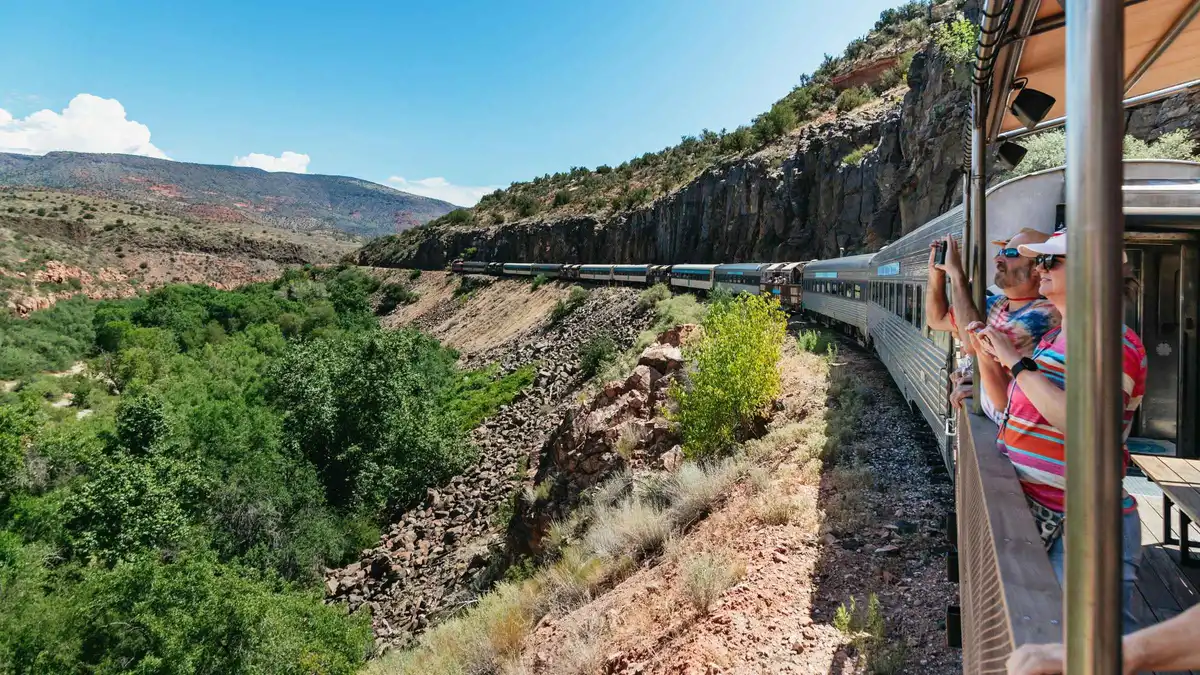
Clarkdale: Verde Canyon Railroad Train Ticket
A 4-hour round-trip train ride from Clarkdale through the Verde Canyon to Perkinsville, with indoor seating plus open-air viewing cars and an on-board champagne toast. Suits travelers who want a scenic ride rather than a hike, including those who cannot manage trail terrain.
Check Availability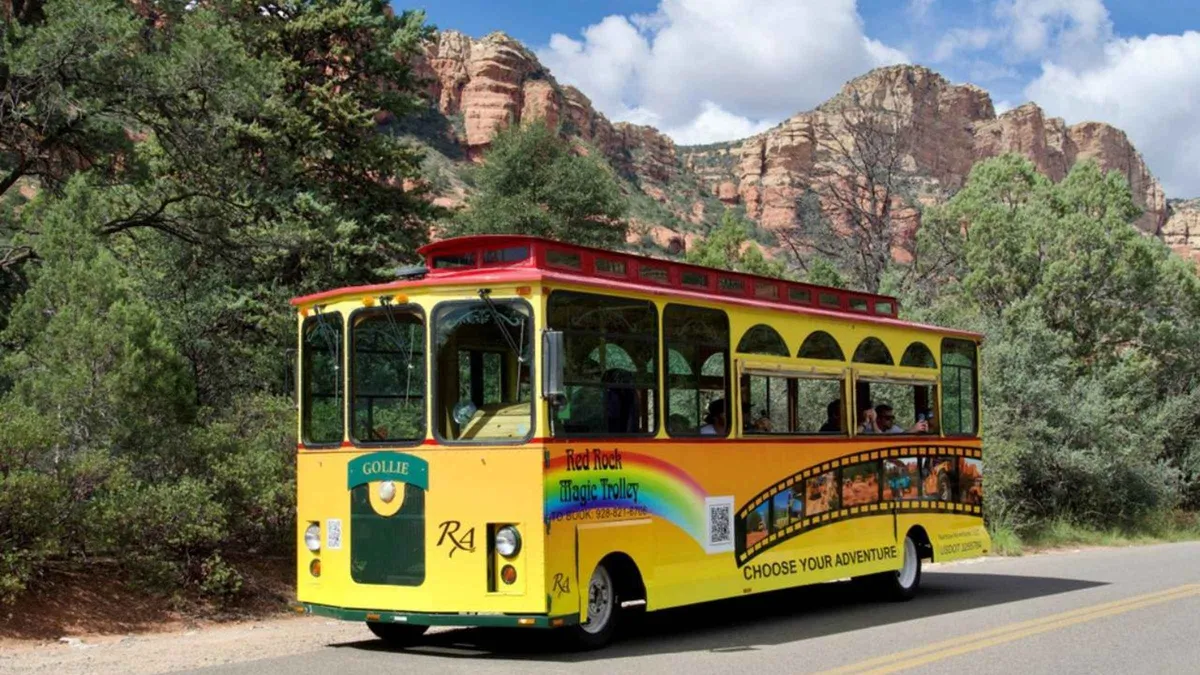 from $27.60
From Sedona: Boynton Canyon Trolley Tour
A 50-minute trolley ride toward Boynton Canyon covering Sedona's western movie history and Native American heritage with photo stops. Suits visitors who want a short, low-effort ride rather than a hike into the canyon itself.
Check Availability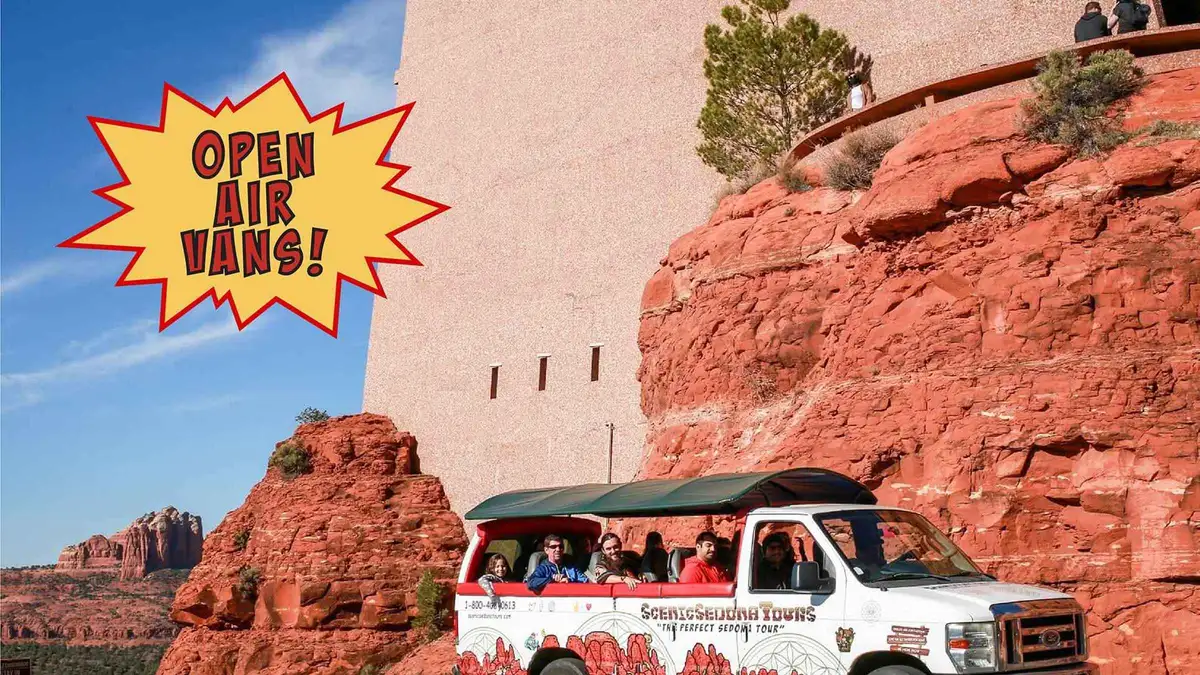 from $126
Most-reviewed sightseeing tour on this page (212 reviews)
from $126
Most-reviewed sightseeing tour on this page (212 reviews) Sedona: Open-Air Van Tour with a Local Guide and 6 Stops
A longer open-air van circuit with six stops mixing sightseeing, shopping and food rather than a single scenic loop. Suits visitors who want to break up the drive with time on foot at each stop.
Check Availability from $49.95
Sedona: Hi-Points Van Tour
A short, low-cost run to Sedona's most-visited viewpoints, positioned by the operator as a quick highlights reel rather than a full-day itinerary. Suits travelers with limited time who want the classic photo stops fast.
Check AvailabilityPrices, ratings and details are the platform's own, checked in Q3 2026; dollar figures are the listed prices — the platform bills in your account's currency.
Where the rest of the trip planning lives
This page is about matching the trail to the child; the logistics around the trip sit on their own pages.
How many days to plan
If the family day described here is your only Sedona day, or one of several, how many days in Sedona has the arithmetic.
Trip-length questionSedona hiking safety
The heat and monsoon rules that apply to every trail in this guide, adult or child, are on hiking safety.
Heat and flash-flood rulesWhere to stay with a family
Which part of town keeps the drive to Bell Rock or West Fork short is covered on where to stay.
Neighborhood by neighborhoodSedona with kids: questions
Is Slide Rock good for young kids?
It can be, for a confident young swimmer with water shoes, but it is a natural rock chute with uneven, sometimes slippery footing and no lifeguard, not a padded water park. Entry closes an hour before the park gate, so plan an early arrival; the full pricing and hours are in Slide Rock's own section.
What is the easiest hike in Sedona for a stroller?
Bell Rock Pathway is the flattest named trail in this guide, 185 feet of elevation change over 3.5 miles one way on a wide, hard surface, so you can turn back whenever the kids are done. See the trail comparison table for how it stacks up against West Fork and Doe Mountain.
Can kids do Devil's Bridge or Cathedral Rock?
Not recommended for small children. Cathedral Rock is a genuine rock scramble at 669 feet of gain over just 1.1 miles, and Devil's Bridge ends at a narrow span with drop-offs on both sides and no railing. Both are better saved for when the kids are older; the reasoning is in trails to skip.
Do Sedona jeep tours have a minimum age?
Most do not publish one at all. A few carry specific rules worth checking before booking: the Grand Canyon Classic day trip requires a car or booster seat for children 8 and under, and the Cathedral Rock e-bike tour excludes children under 14 outright. Details are in heat, hydration and tour rules.
Is Sedona too hot for kids in summer?
Summer highs regularly reach the upper 80s and low 90s Fahrenheit, and the National Weather Service recommends strenuous outdoor activity only in the early morning. Plan trailhead arrivals by 8:00 am from June through September and lean on the low-effort indoor and shaded stops for the middle of the day.
Is West Fork Trail hard for kids?
The maintained first three miles are easy going with several creek crossings on stepping stones, well suited to kids who can manage wet shoes; the Forest Service does not publish an exact crossing count. Full details, including the $15 day-use fee, are in the West Fork section.
Sedona with Kids on Video
Three clips showing family hikes and low-effort stops around Sedona before you land.
Family Travel to Sedona, Arizona with Kids: Hiking Trails, Things to Do & Places to Visit
A family's own route through Sedona's easier trails and sights, useful for pacing a day with kids.
Video: VentureFullExploring Sedona with Kids | Family-Friendly Hikes, Views & Things to Do
A day-one walkthrough of family-friendly hikes and viewpoints from a traveling family.
Video: Milling Around9 Easy Sedona Hikes with Kids
A roundup of gentler trail options to compare against the ones covered on this page.
Video: Family Destinations GuideVideos load from YouTube only when you press play.
Reviewed Q3 2026 (July–September 2026); next review Q4 2026. Prices, hours and terms are set by the venue or operator and confirmed at checkout.
We may earn a commission if you book through one of our links, at no extra cost to you. Full affiliate disclosure