 Sedona City Guide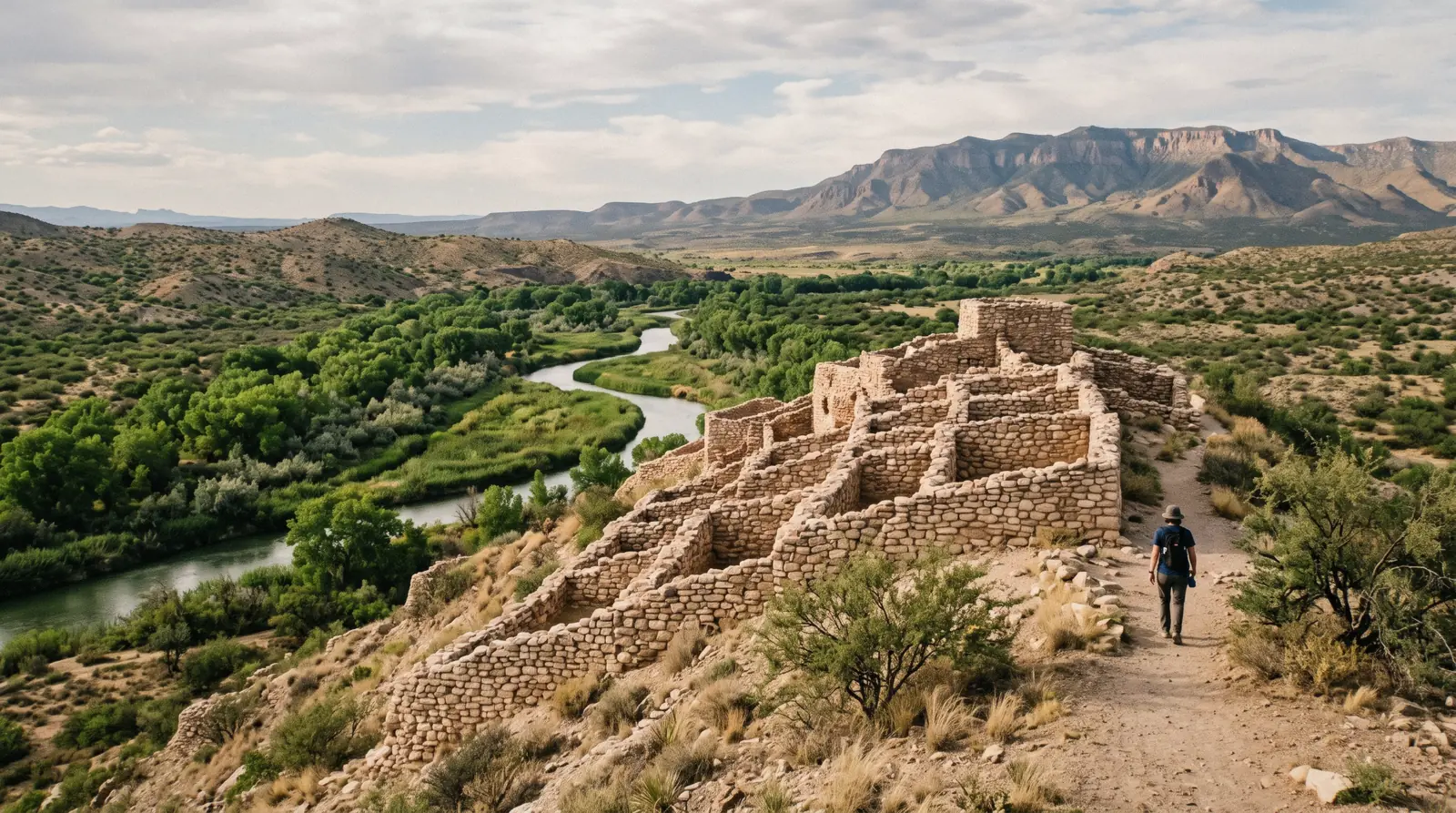
Tuzigoot National Monument
Tuzigoot National Monument is a 110-room Sinagua pueblo built along the spine of a limestone ridge above the Verde River, just outside Clarkdale. It's a different kind of site than Montezuma Castle 20 minutes away. A hilltop town you walk through and around, not a cliff dwelling you view from below. And the same $10 ticket covers both for a week. This page covers the hours, the fee, the museum, the loop and its gradient, the marsh below, and pairing the stop with Clarkdale's own Verde Canyon Railroad next door. The rest of the archaeology layer is on Montezuma Castle and Palatki; the full list of day trips is on the day trips hub. Why this pairs with a Sedona base rather than a trip of its own is explained on the homepage.
Quick answer Fee, hours, what makes it different from Montezuma Castle, in three lines
Tuzigoot is open daily 8:00 am to 4:45 pm, $10 per adult on the same 7-day ticket that covers Montezuma Castle. Unlike the Castle, you walk through the pueblo itself, on a ridge-top loop above the Verde River.
Key takeaways
- The $10 ticket is shared with Montezuma Castle for 7 days, so buying one covers the other
- This is a walkable ruin, not a viewed-from-below cliff dwelling. The loop takes you across the 110-room pueblo itself, with the museum built right at the entrance
- It sits a few minutes from Clarkdale's own depot; pair it with the Verde Canyon Railroad for a fuller Verde Valley day
- No operator runs a paid tour inside Tuzigoot. See what the jeep tours near Sedona actually visit instead
Key facts
Opening hours
| Daily, all year | 8:00 am–4:45 pm |
|---|---|
| Christmas Eve and New Year's Eve | 8:00 am–1:45 pm |
Closed December 25 and January 1
Admission
- Adult
- $10 per adult (16+), 7-day pass, valid at both Tuzigoot and Montezuma Castle
- Reduced
- Annual local pass $35 (cardholder plus 3 adult guests, both monuments)
- Free
- Children under 16
Planning it
- Time needed
- Not stated by the Park Service; our routing: 45 minutes to 1 hour for the ridge loop and the museum
- Book ahead
- Optional — walk-up usually fine
- Address
- 25 W Tuzigoot Rd, Clarkdale, AZ 86324
The same fee structure that applies at Montezuma Castle applies here, read from the National Park Service's own fee pages on 9 September 2026, one ticket, two monuments, no reseller and no separate line to skip.
Have you already bought a ticket at Montezuma Castle this week?
| Option | Price | Covers | Valid for | Book |
|---|---|---|---|---|
| 7-day entrance ticketAnyone visiting once, or doing both monuments this trip | $10 per adult (16+) | One adult, 16 and older; under 16 free | 7 days, valid at both Tuzigoot and Montezuma Castle | Official site |
| Annual local passVerde Valley locals or a long winter stay | $35 | Cardholder plus 3 adult guests | 1 year, both monuments | Official site |
| America the Beautiful annual passTravelers also stopping at the Grand Canyon or other parks this trip | $80 | Cardholder plus 3 adult guests at every federal fee site nationwide | 1 year from month of purchase | Official site |
If you're stopping at Montezuma Castle the same week, buy the $10 ticket at whichever gate you reach first. It covers both, so there's no reason to pay twice.
Sinagua sites near Tuzigoot: what tour operators actually visit
As at Montezuma Castle, no operator sells guided entry to Tuzigoot itself. It's a self-guided walk with a ranger-staffed visitor center, not a ticketed tour product. These GetYourGuide trips visit different, privately accessible Sinagua-era ruins and rock art around Sedona, useful for a guide's commentary on the same culture, but they do not stop at this monument.
 from $130.27
Sedona: Ancient Ruins Pink Jeep Tour
A jeep route into the backcountry to see Sinagua-era dwellings, rock art, and red rock formations along the way, with the guide covering the archaeology. Suits visitors who want ruins and geology combined rather than a separate hike to Palatki or Honanki.
Check Availability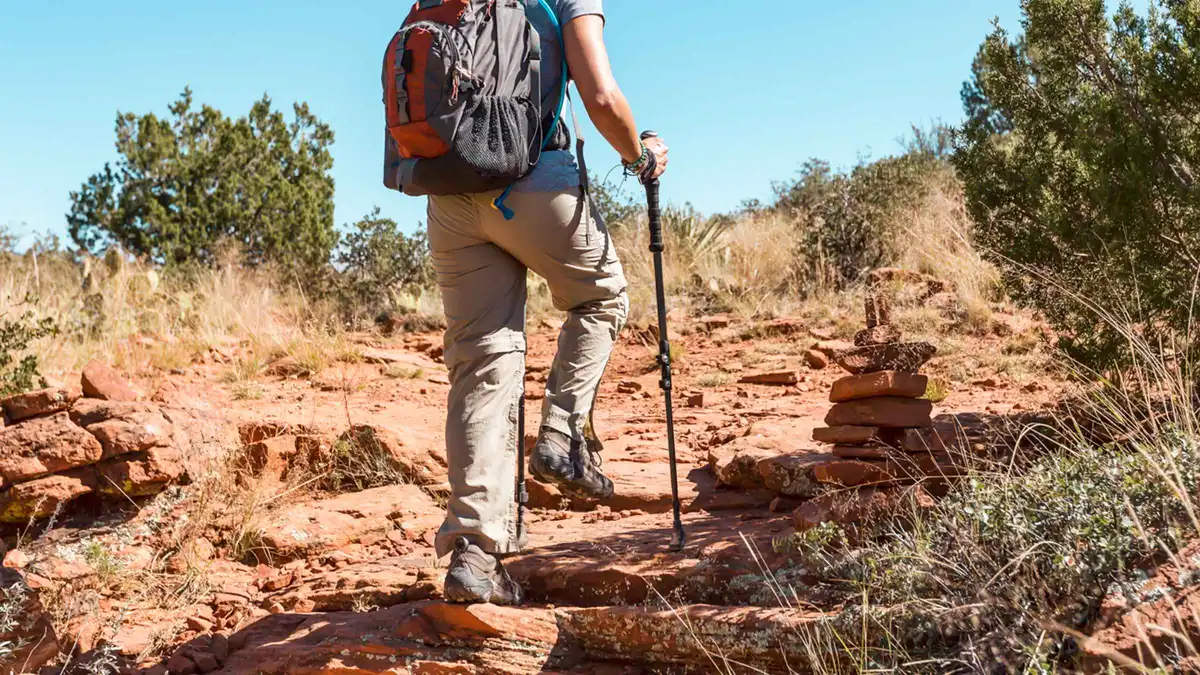 from $123.86
From Sedona: Archeology and Nature Hike
A Jeep ride to a private access point followed by a short, flat 2-mile hike to Native American ruins, positioned as an easier alternative to Palatki or Honanki. The same Sinagua-era dwelling style can be seen without a guide at Palatki Heritage Site, which requires a Red Rock Pass plus a free Recreation.gov reservation.
Check AvailabilityPrices, ratings and details are the platform's own, checked in Q3 2026; dollar figures are the listed prices — the platform bills in your account's currency.
A hilltop town for several hundred people
Tuzigoot is the largest and best-preserved of the many Sinagua pueblo ruins in the Verde Valley, a walkable town, not a single dwelling.
110 rooms along the ridge, 1125 to 1400
The Sinagua built Tuzigoot between about 1125 and 1400 CE along the spine of a limestone-and-sandstone ridge, roughly 120 feet above the Verde River floodplain near present-day Clarkdale. The finished pueblo held over 110 rooms across two to three stories, with taller central chambers that appear to have served public or communal functions rather than housing. There were no street-level doorways between most rooms; residents used ladders through trapdoor-style roof openings to move between them, a layout that reads clearly from the elevated loop trail today.
- Built roughly 1125-1400 CE along a natural limestone-sandstone ridge
- Over 110 rooms, 2-3 stories, some taller central rooms likely communal
- Entered via ladders through roof trapdoors, not street-level doors
- Probably home to several hundred people across the pueblo's occupied centuries
A trading community, not an isolated outpost
Excavated material shows the people at Tuzigoot maintained trade connections stretching hundreds of miles, shell from the Gulf of California, turquoise, and pottery styles that trace contact across a wide region of the Southwest, evidence of a community that was well integrated into a broader trade network rather than isolated on its ridge. Occupation continued into the 1300s before the site was abandoned, part of the same wider Sinagua dispersal that also emptied Montezuma Castle by the following century.
Excavated in the 1930s, rebuilt for visitors
Tuzigoot sat unexcavated until 1933, when Louis Caywood and Edward Spicer of the University of Arizona ran a two-year dig funded by the federal Civil Works Administration and Works Project Administration. The same Depression-era public works programs that funded archaeology across much of the Southwest. Excavation ran 1933-1935; the following year the site was prepared for public display and a Pueblo Revival-style museum and visitor center was built at the entrance, the same building that greets visitors today.
The monument itself was formally designated on 25 July 1939.
The loop, the museum, and the marsh below
The ridge-top loop
The visitor route is a paved loop that climbs the low ridge and threads through and around the excavated room blocks, with interpretive signage along the way. It's short but not flat, enough of a grade climbing the ridge that the trail is rated moderately easy rather than fully level, and there is little shade, which matters more here than at Montezuma Castle's shaded cliff-base loop. Plan for full sun exposure and go early in warmer months.
The museum, right at the entrance
The Pueblo Revival museum built in 1935-36 sits at the trailhead and holds the excavated material from Caywood and Spicer's dig, pottery, tools, and the trade-goods evidence for the community's wide-reaching contacts. Unlike Montezuma Castle's smaller display, Tuzigoot's museum is a genuine stop worth 15-20 minutes before or after the loop, not just a five-minute pass-through.
The wetlands below the ridge
From the high points of the loop, the view drops to the Tavasci Marsh, a spring-fed wetland along the Verde River floodplain below the pueblo, a rare patch of year-round water and greenery in an otherwise semi-arid landscape, and part of what made the ridge-top site viable for farming and settlement in the first place. It's visible from the trail rather than a separate stop.
Pairing Tuzigoot with Clarkdale
Tuzigoot sits at the edge of Clarkdale, a small former smelter town that's now built its identity around the Verde Canyon Railroad, whose depot at 300 N. Broadway is a short drive from the monument. The railroad's own site quotes two different drive times between the two on the same page, 25 minutes in its overview text, 40 minutes in its turn-by-turn directions. So treat the Tuzigoot-to-depot leg as roughly 25-40 minutes rather than a fixed figure, and build slack into a same-day plan if you're booked on a specific train departure.
Clarkdale itself is walkable in under an hour and has its own small historic district around the old smelter site, a natural stop before or after either the pueblo or the train.
Hours, closures and getting here
Tuzigoot is open every day, 8:00 am to 4:45 pm, with shorter 8:00 am to 1:45 pm hours on Christmas Eve and New Year's Eve; the monument is closed outright on December 25 and January 1.
No NPS or ADOT page publishes a single Sedona-to-Tuzigoot mileage or time. The practical route mirrors Montezuma Castle's: SR-179 south to I-17 Exit 298, then south on I-17 toward Camp Verde and Cottonwood, following signs west to Clarkdale and the monument. As a rough cross-check, the scheduled Verde Shuttle bus covers the separate Sedona-to-Cottonwood leg in about 30 minutes, a transit time, not a driving time, and a different route than the interstate drive to Tuzigoot, so treat it only as a loose sense of the distance involved rather than a substitute figure.
What most visitors miss at Tuzigoot
Three things that change how you plan the stop, each sourced to the monument's own pages or the excavation record.
- Your Montezuma Castle ticket already covers this. The $10 adult fee is a shared 7-day pass. Most visitors buying at one gate don't realize the other monument is already paid for [nps.gov/tuzi fees page, read in Q3 2026]. - There is almost no shade on the loop. Unlike the cliff-base shade at Montezuma Castle, Tuzigoot's ridge-top trail sits in full sun for its entire length, which matters most from late spring through early autumn [Coconino/Verde Valley climate figures, facts pack, read in Q3 2026]. - The museum is worth real time here, not a walk-through. Built in 1935-36 to display the Caywood-Spicer excavation, it holds trade-goods evidence (shell, turquoise, pottery styles) showing the pueblo's contacts stretched hundreds of miles, a fuller collection than the smaller Montezuma Castle display [nps.gov/tuzi history page, read in Q3 2026].
Tuzigoot map: the pueblo and Clarkdale next door
The monument entrance, Clarkdale's railroad depot a short drive away, and Montezuma Castle 20 minutes east.
Next stop from Tuzigoot
Drive minutes are the railroad's own published estimate or our routing from agency road fragments, not a single official figure in every case.
Verde Canyon Railroad
The railroad's own site gives two different times on the same page for this short Clarkdale leg. Verde Canyon Railroad guide.
25-40 min driveMontezuma Castle National Monument
Your Tuzigoot ticket already covers it. Montezuma Castle's cliff dwelling, viewed from a paved loop below.
About 20 min driveJerome
The old mining town perched on Cleopatra Hill. Jerome guide.
A short drive up SR-89A from ClarkdaleTuzigoot National Monument questions
Is the Tuzigoot National Monument worth seeing?
Yes, especially paired with Montezuma Castle on the same $10 ticket. Tuzigoot is the walkable half of the pair, a 110-room hilltop pueblo you cross on foot rather than a dwelling you view from below. Budget 45 minutes to an hour for the loop and the museum.
Is Tuzigoot closed?
It's open daily, 8:00 am to 4:45 pm, with shorter hours on Christmas Eve and New Year's Eve and full closure on December 25 and January 1. Otherwise there is no seasonal closure.
Who lived at Tuzigoot?
The Sinagua people, who built and occupied the pueblo roughly 1125 to 1400 CE. The same culture that built Montezuma Castle and Palatki. Excavated trade goods show the community had contacts stretching hundreds of miles, not an isolated settlement.
What is the significance of the Tuzigoot National Monument?
It's the largest and best-preserved of the many Sinagua pueblo ruins in the Verde Valley, formally protected as a national monument since 25 July 1939. The 1933-35 excavation by Louis Caywood and Edward Spicer, and the museum built to display its finds, made it one of the more thoroughly documented Sinagua sites open to the public.
Does the Montezuma Castle ticket cover Tuzigoot?
Yes. The $10 adult entrance fee is a 7-day pass valid at both monuments. Buy it at whichever gate you reach first and it covers the other automatically. See the tickets table above for every pass option.
How do I get to Tuzigoot from Clarkdale or Sedona?
From Clarkdale it's a short drive to the monument entrance at 25 W Tuzigoot Rd. From Sedona, no agency publishes a single mileage figure; the practical route runs SR-179 south to I-17 Exit 298, then south toward Camp Verde and Cottonwood before turning west into Clarkdale. See getting to Montezuma Castle for the shared first half of the drive.
Tuzigoot On Film: The Ridge-Top Pueblo
Three walkthroughs of the loop trail, the museum and the view over the marsh below.
Tuzigoot National Monument was a great day trip from Sedona
A day-trip walkthrough of the loop and the museum, filmed from a Sedona base.
Video: Outdoor SoCalTuzigoot National Monument | Ancient Pueblo in Arizona
A closer look at the room blocks and the ridge-top layout described above.
Video: Never Stop AdventuringSedona Travel Guide | MONTEZUMA CASTLE & TUZIGOOT
Both monuments covered together on the shared 7-day ticket, filmed on the same trip.
Video: Eat Trade TravelVideos load from YouTube only when you press play.
Reviewed Q3 2026 (July–September 2026); next review Q4 2026. Prices, hours and terms are set by the venue or operator and confirmed at checkout.
We may earn a commission if you book through one of our links, at no extra cost to you. Full affiliate disclosure