 Sedona City Guide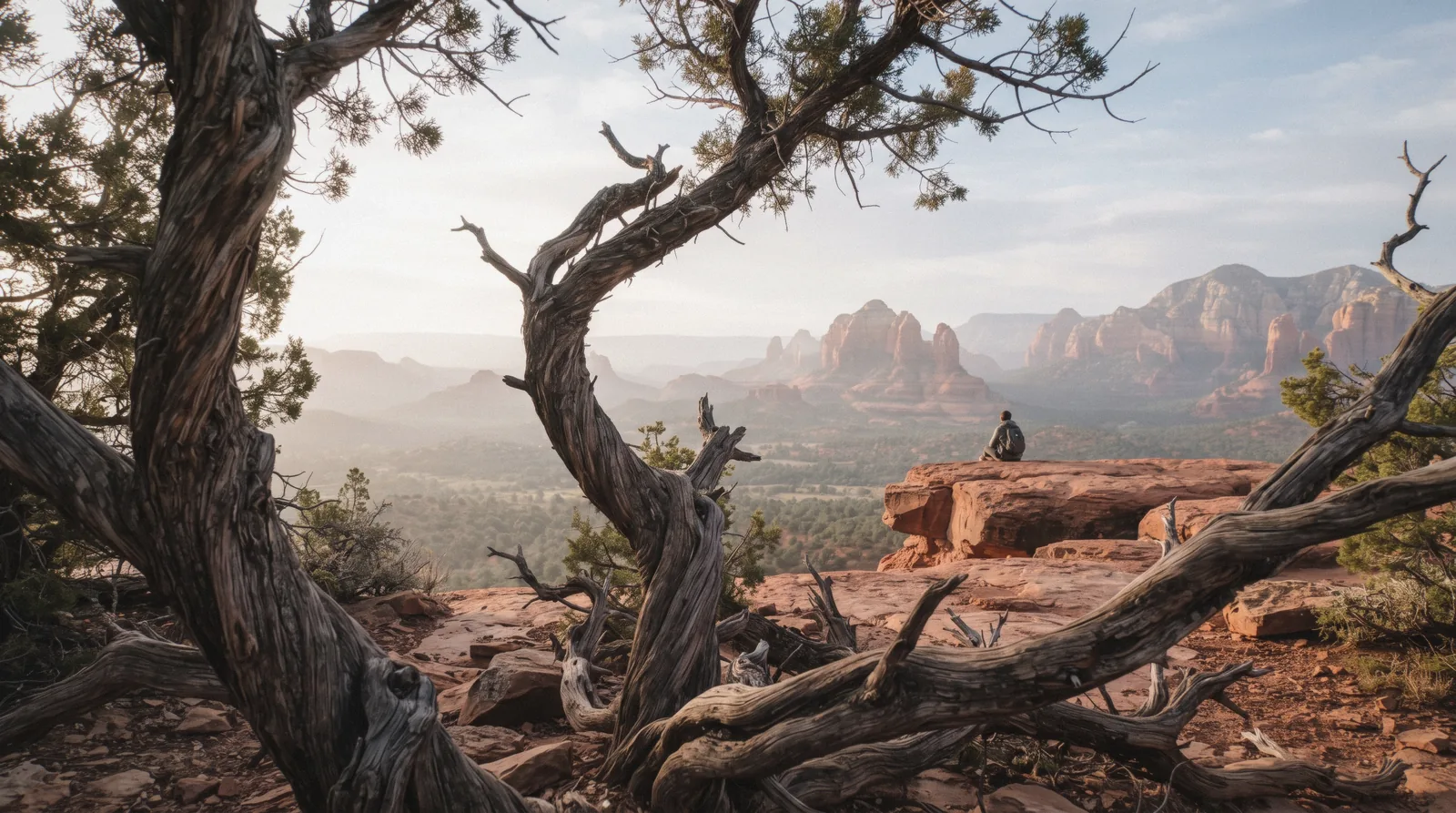
Sedona Vortex Sites
Four named sedona vortex sites, and zero federal, state or city agencies that measure, certify or manage any of them: Airport Mesa, Cathedral Rock, Bell Rock and Boynton Canyon carry the name, but Coconino National Forest manages all four as ordinary trails. This page, part of the main Sedona guide for everything else worth planning, says plainly where the vortex claim comes from, what the Forest Service actually manages at each site, and what a visit there involves.
Quick answer What a vortex is claimed to be, where the claim started, and the four named sites
No agency measures or certifies a sedona vortex; the Forest Service manages the four named sites as ordinary trails and recreation land. The term traces to a Sedona intuitive counselor's readings in the early 1980s, popularized further by the 1987 Harmonic Convergence gathering.
Key takeaways
- The four named sites, Airport Mesa, Cathedral Rock, Bell Rock and Boynton Canyon, are also on our hiking trails list with their official Forest Service length and elevation figures.
- A guided vortex tour with a spiritual guide or a jeep vortex tour explains the belief system on-site; nothing here requires a guide, and the trailheads are open to anyone with a Red Rock Pass.
- Cathedral Rock is the one site of the four rated Strenuous by the Forest Service, a rock scramble rather than a walk; the other three are Easy to Moderately challenging.
What a Sedona vortex is claimed to be, and where the claim comes from
"Vortex" is the word used for a place where, believers hold, the earth's energy runs unusually strong and can be felt as a physical or emotional sensation. It is not a term used by the U.S. Geological Survey, the National Park Service or Coconino National Forest, and no peer-reviewed measurement of a Sedona vortex has been published by any of them. Visit Sedona, the city's own tourism bureau, states the position plainly on its own vortex guide: "conventional science hasn't fully embraced vortex theory," while noting that visitors report a range of experiences at the four sites.
The same Visit Sedona page traces the term to Page Bryant, described as an intuitive counselor who mapped what she identified as the city's energy centers in the early 1980s and named the four places still cited today: Airport Mesa, Cathedral Rock, Bell Rock and Boynton Canyon. The claim reached a wider audience at the Harmonic Convergence, a synchronized global meditation event held August 16-17, 1987, organized by Jose and Lloydine Arguelles through the Planet Art Network; Visit Sedona's own account states that "thousands gathered" at the four sites during that weekend. Before Bryant's readings, Sedona was known regionally for its red-rock scenery and its role in Western film production; the vortex framing dates the town's shift toward a spiritual-tourism identity to a specific decade, not to ancient or indigenous tradition, a distinction worth stating plainly since some marketing implies otherwise.
One further claim circulates on tour-operator sites and in some local guides: that a 2016 survey using handheld equipment recorded electromagnetic readings at Bell Rock and Cathedral Rock different from surrounding ground. No publishing journal, university department or government agency is named as the source of that survey by any site repeating the claim, and this page could not trace it to an original publication. It is repeated here only so a reader who has heard it knows where it sits: as an unverified claim passed between tourism and tour-operator sites, not as a citable measurement. Whatever a visitor feels standing at any of the four, it is a personal report, not a certified reading, and this page treats it as exactly that.
What the Forest Service actually manages there
The Coconino National Forest trail pages for all four sites, Cathedral Rock Trail No. 170, Bell Rock Pathway No. 96, Boynton Canyon Trail No. 47 and the Airport Loop Trail No. 210 that circles Airport Mesa, describe each as a recreation trail with a published length, elevation gain and difficulty rating. None of the four pages mentions a vortex, an energy field or anything to measure. What is managed, and fee-gated with a Red Rock Pass at most of the trailheads, is the trail itself: erosion control, trailhead parking, signage and, at Cathedral Rock and Boynton Canyon, wilderness-area rules that limit group size and ban mechanized travel.
The four named sites
Walk length, elevation gain and rating are the Forest Service's own figures for the trail at each site, read from fs.usda.gov in Q3 2026. Parking and what visitors report at each are our own observation, not an official claim.
The four sites
-
Airport Mesa
Overlook and loop trail Not named in the Forest Service's own fee-site listA short walk to the saddle; 2-3 hr for the full Airport Loop Trail around the mesa
The saddle just off Airport Road, with a 360-degree view over West Sedona and the airport runway below; the named vortex spot is the rock outcrop a short scramble from the small parking pull-off, separate from the longer Airport Loop Trail that circles the mesa's upper slope.
Tip: This is one of the smallest paved lots of the four sites and the closest to town; arrive by mid-morning or expect to circle for a spot.
-
Cathedral Rock
Trail, rock scramble from $5 Red Rock PassAbout 1.5 hr roundtrip
The Forest Service rates the 1.1-mile roundtrip trail Strenuous and calls it more of a rock scramble than a hike over exposed slickrock; the saddle partway up, not the summit, is the spot most visitors treat as the vortex site.
Tip: This trailhead is also served by the free Sedona Shuttle; its own small lot on Back O' Beyond Road fills earliest of the four.
-
Bell Rock
Pathway from $5 Red Rock PassAbout 2.5 hr for the full Bell Rock Pathway
The Forest Service rates the Bell Rock Pathway Easy: a wide, hard-surfaced path with 185 feet of elevation change running 3.5 miles one way; the lower slopes of the rock itself, reachable a short scramble off the main path, are where most visitors stop.
Tip: Climbing higher on the rock face is legal but unmarked and gets steep fast; the Pathway itself needs no scrambling at all.
-
Boynton Canyon
Trail from $5 Red Rock PassAbout 2.5 hr one way, 5 hr roundtrip
The Forest Service rates the trail Moderately challenging at 6 miles out and back with 931 feet of gain; the canyon runs between the Enchantment resort's walls, and most visitors treat the first mile, near the trailhead, as the site rather than walking the full canyon.
Tip: This is the longest walk of the four sites and has no shuttle service; a private vortex tour is the only way to reach it without driving yourself.
Numbers match the list — tap a pin for the guide.
The four sites compared
Walk length, elevation gain and rating are the Forest Service's own figures, read in Q3 2026; parking and busiest hour are our own observation from the same trailheads, not an official count.
| Site | Walk to it | Elevation gain | Parking | Busiest hour |
|---|---|---|---|---|
| Airport Mesa | A few minutes from the pull-off | Not stated for the short walk | Smallest lot of the four, no shuttle | Sunset, for the valley view |
| Cathedral Rock | About 0.6 mi one way to the saddle | 669 ft (full 1.1 mi roundtrip) | Small lot, shuttle-served | Sunrise, before the lot fills |
| Bell Rock | A few minutes off the Pathway | 185 ft (full 3.5 mi one way) | Large paved lot, no shuttle | Midday, family groups off the highway |
| Boynton Canyon | About 1 mi to the canyon mouth | 931 ft (full 6 mi roundtrip) | Small lot, no shuttle | Late morning, resort and tour traffic |
"Busiest hour" is our own reading of foot traffic at each trailhead, not a Forest Service or Visit Sedona figure; no agency publishes visitor counts by site or by hour for any of the four.
Guided vortex sessions
Prices, ratings and what each includes are the operator's own, listed on GetYourGuide in Q3 2026. Every card is a guide leading a session at one or more of the four sites above; none is required to visit any of them on your own.
 from $123.86
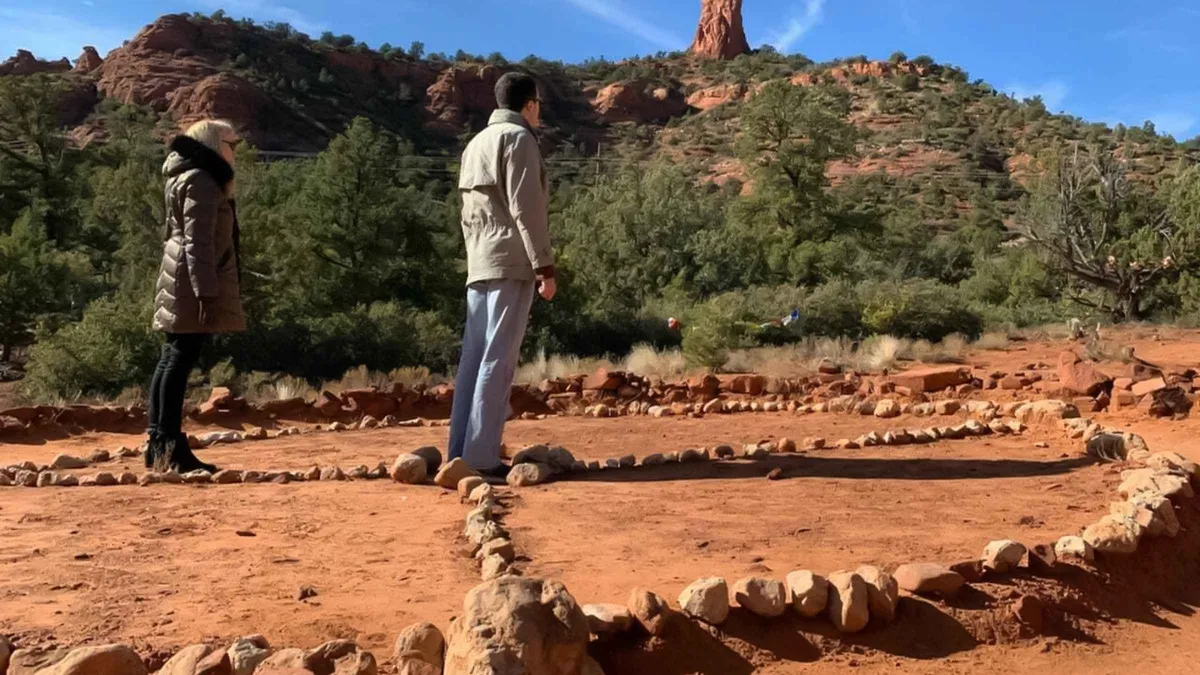
Sedona: Guided Vortex Jeep Tour
A Jeep ride to several vortex sites with time to walk around each one while the guide explains the local vortex lore. Suits visitors curious about the energy-site claims who still want a driven itinerary.
Check Availability from $142.42
Sedona: Touch the Earth Pink Jeep Vortex Tour
A vortex-themed jeep tour where the guide talks through the landscape's supposed areas of heightened awareness at a couple of stops. Suits visitors who want the vortex framing without leaving the vehicle for long.
Check Availability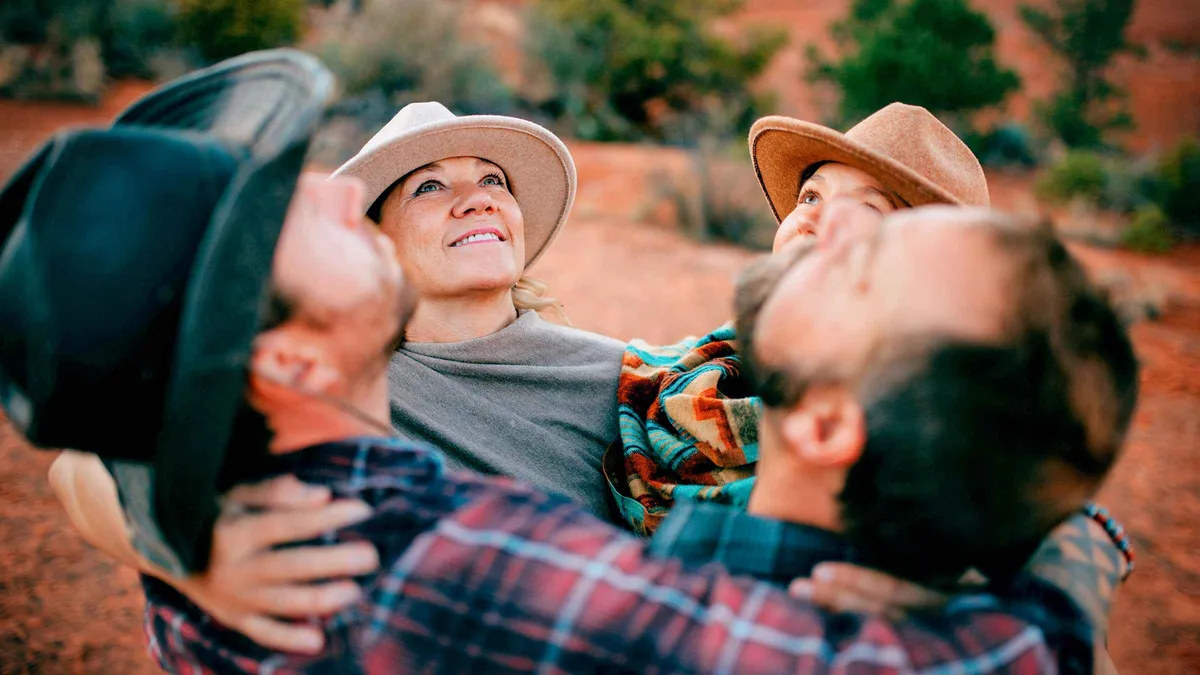 from $175
Sedona: Vortex Tour with a Spiritual Guide
A private, on-foot vortex tour led by a self-described intuitive healing facilitator, built around the visitor's own intentions rather than a fixed script. Suits travelers who want a personalized spiritual session over a standard sightseeing stop.
Check Availability from $198
Sedona Vortex Tour with Professor Todd Denny
A vortex tour led by a self-identified professor who frames the visit as a personal-growth session rather than a straight sightseeing stop. Suits travelers looking for a teaching-style guide over a general tour narrator.
Check Availability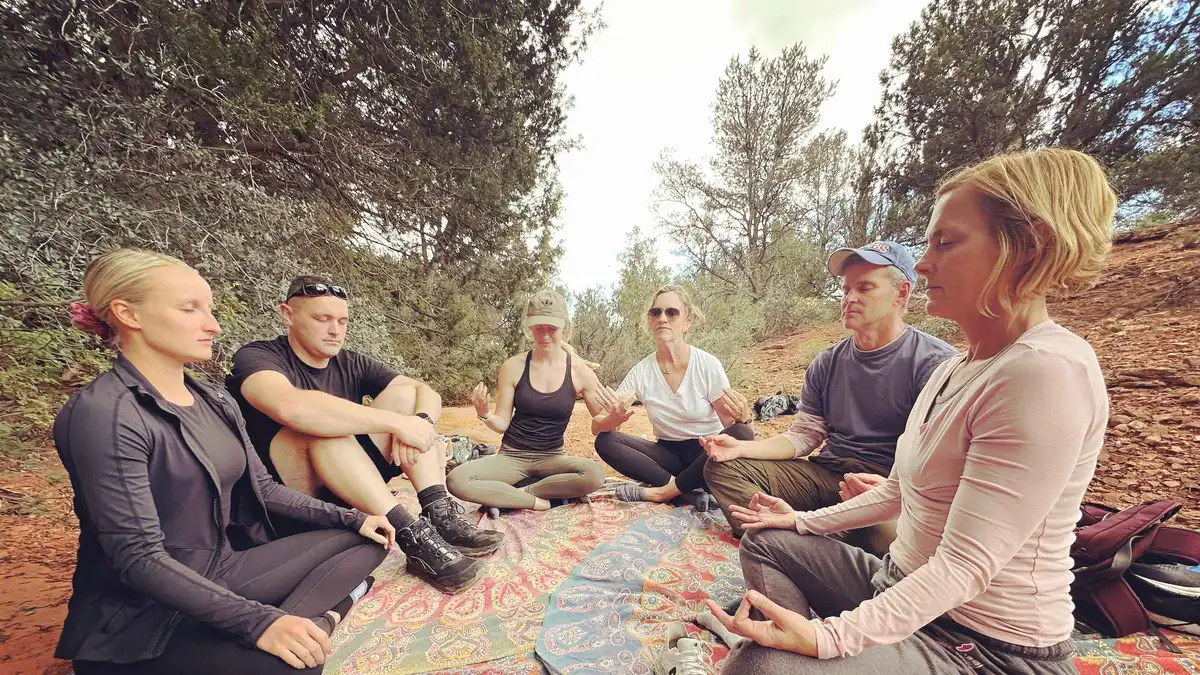 from $160
Sedona: Meditate in the Sedona Vortex Energy
A seated, guided meditation at a vortex site led by a certified instructor rather than a walking tour, aimed at people who want to sit with the energy claim rather than hike to several sites. Suits meditators more than sightseers.
Check AvailabilityPrices, ratings and details are the platform's own, checked in Q3 2026; dollar figures are the listed prices — the platform bills in your account's currency.
What people actually do at a vortex site
Most visitors do one of three things: sit or stand quietly for a few minutes at the spot a guide or a guidebook names, walk the trail itself and treat the destination as a scenic overlook, or join a guided session where an operator leads a meditation or a short talk on the belief's history. None of the four sites has a marked "vortex point"; the exact spot is passed on by word of mouth, by tour operators or by online guides, and it varies between sources. A guided tour's main value over a solo visit is that explanation, not access: every trailhead is open to any hiker with a Red Rock Pass, guided or not.
Some operators and local guides describe the four sites as different in character, an "upflow" feel at Airport Mesa and Boynton Canyon and a "downflow" or grounding feel at Cathedral Rock and Bell Rock. This is a belief-system framework, not a measured property, and it is presented here as what is claimed, not as a fact this site can verify.
The trail rules apply regardless of what you're there for
All four sites sit inside Coconino National Forest, and three of the four trailheads, Cathedral Rock, Bell Rock and Boynton Canyon, require the same $5 daily, $15 weekly or $20 annual Red Rock Pass as any other trail on the hiking trails list. Boynton Canyon and the upper reaches of Cathedral Rock sit inside designated wilderness, which caps group size and bans bikes, drones and any mechanized travel past the wilderness boundary; a guided vortex group larger than the wilderness limit splits into smaller groups on the trail. Leaving an offering, a stacked cairn, a ribbon tied to a branch or a crystal left behind, is treated by the Forest Service the same as any other litter or unauthorized structure on federal land, regardless of the intent behind it.
Heat and the same hazards as any Sedona trail
None of the four sites is shaded, and the two with real elevation gain, Cathedral Rock and Boynton Canyon, carry the same heat exposure as any other trail on this list. Our hiking safety guide has the National Weather Service's HeatRisk advice in full; the short version is strenuous activity only before 7am in summer, with water on you regardless of how short the walk looks on a map.
Crowding is a byproduct of the belief, not the trail rating
Cathedral Rock and Airport Mesa draw foot traffic well beyond what a 1.1-mile Strenuous trail or a short overlook walk would normally see, precisely because both are on the four-site list. Neither the Forest Service nor Visit Sedona publishes a visitor count by site, so this page cannot say by how much; the small paved lots at both, and the fact that Cathedral Rock is one of the shuttle's five stops, are the closest thing to an official signal of demand that exists.
The three guided formats, and how they differ
The tour cards above split into three formats rather than one product. A jeep tour, the 2.5-hour vortex jeep tour or the Touch the Earth tour, drives between two or three sites in an open-top 4x4 and stops at each for 15 to 20 minutes with the guide talking through the belief system; it covers the most ground and needs the least walking. A one-on-one or small-group session, the tour with a spiritual guide or the session with Professor Todd Denny, stays at a single site for the full booking and spends the time on instruction rather than moving between stops. A meditation session, the 90-minute guided meditation, is the shortest and the most seated of the three, usually held at one accessible site rather than a trailhead requiring a climb.
None of the three formats changes what is actually at the site: the same trail, the same rock, the same Forest Service rules. What a booking buys is the guide's explanation and, on the jeep tours, the driving between sites that a solo visitor on foot cannot match in one morning.
Which site, if you only have time for one
Airport Mesa asks the least: a short walk from a pull-off and a wide view, best near sunset. Bell Rock asks almost as little and has the largest lot of the four, so it is the easiest one to reach without an early start. Cathedral Rock asks the most physically, a genuine scramble the Forest Service itself rates Strenuous, and rewards that effort with the closest thing to a summit among the four.
Boynton Canyon asks the most time and offers the most solitude, since it draws the least casual foot traffic of the four and has no shuttle to bring a crowd. None of the four is "more powerful" by any measurement this site can cite; the choice comes down to how much walking, and how much company, a visitor wants.
Beyond the four sites
Three pages this hub routes to before or after a visit.
Hiking trails
All four vortex sites sit on official Forest Service trails, grouped with the other seven on the full list.
Same trailheads, the full trail dataRed Rock Pass
The parking pass needed at three of the four vortex trailheads.
Buy before you drive, not at the trailheadHiking safety
Heat, water and what to carry, the same rules on an unshaded trail regardless of why you're walking it.
Read before a summer visit to any of the fourSedona vortex: questions
What is a Sedona vortex?
A place believers hold has unusually strong earth energy, a term traced to a Sedona intuitive counselor's readings in the early 1980s and popularized by the 1987 Harmonic Convergence gathering. No federal, state or city agency measures or certifies a vortex; the full history and the Forest Service's own position are above.
Where are the Sedona vortex sites on a map?
Four named sites: Airport Mesa, Cathedral Rock, Bell Rock and Boynton Canyon, each a Forest Service trail with its own trailhead. The grouped list above has GPS coordinates and a map for all four; each also has its own page with the full Forest Service trail data.
What is the most powerful Sedona vortex?
No agency measures vortex strength, so there is no official answer. Local guides and tour operators most often name Cathedral Rock or Boynton Canyon, the two sites with the most elevation gain and physical effort to reach; that popularity is not a measurement, and the four-site comparison above sticks to what can actually be sourced: walk length, elevation and parking.
What does a Sedona vortex feel like?
Visitors report a wide range of sensations, from a sense of calm to physical warmth to nothing at all; Visit Sedona's own guide acknowledges the range rather than promising a specific effect. A guided session offers an explanation of the belief framework on-site if that context is what you're after.
Do you need a guide to visit a Sedona vortex site?
No. All four sites are open Forest Service trails, reachable with a Red Rock Pass and no reservation. A guided tour adds the historical and spiritual explanation, not access; our hiking trails page has the same trail data a guide works from.
Are the Sedona vortex sites free to visit?
The trails themselves charge no admission; parking at Cathedral Rock, Bell Rock and Boynton Canyon needs a $5 daily, $15 weekly or $20 annual Red Rock Pass, and Airport Mesa's small lot is not named on the Forest Service's own fee-site list. A guided session with an operator is a separate paid product, listed in the tour cards above.
Sedona Vortex Sites on Film
Three accounts of visiting the four sites, filmed by hikers rather than by tour operators.
Guide to Sedona Vortex Sites | TOP Four Sedona, Arizona Vortexes
A walkthrough of all four named sites, with the trail and parking shown for each.
Video: Dan TreksI Found the Hidden Energy Vortexes in Sedona
One traveler's account of visiting several of the sites, including the walk in to each.
Video: Sky LifeSedona's Hidden Vortex Spots | What Happens When You Visit?
A first-person account of what a visit to the sites actually involves, filmed on the trails.
Video: Roame TravelVideos load from YouTube only when you press play.
Reviewed Q3 2026 (July–September 2026); next review Q4 2026. Prices, hours and terms are set by the venue or operator and confirmed at checkout.
We may earn a commission if you book through one of our links, at no extra cost to you. Full affiliate disclosure