 Sedona City Guide
Sedona Stargazing: Dark Sky Spots, Tours and Best Times
Sedona became an International Dark Sky Community in 2014, the eighth place in the world to earn that designation, and the reason is a city lighting code most visitors never read and a lot of empty Forest Service land ringing the town. Sedona stargazing splits three ways: free roadside pull-offs that need nothing but a flashlight, a short list of trailheads that need the same parking pass daytime hikers use, and paid tours that bring a telescope and a guide who already knows what is overhead tonight. It is the after-dark half of the guide's bigger picture of a Sedona visit.
Quick answer Why Sedona's sky is actually dark, which pull-offs are free, and what a guided tour adds
Sedona has been an International Dark Sky Community since 2014 under a city lighting code that caps outdoor light output and requires shielded fixtures, and the payoff is a handful of pull-offs within a short drive of town where the Milky Way is visible with no equipment at all.
Key takeaways
- Fay Canyon and Baldwin Trailhead are on the Red Rock Pass fee-site list; Dry Creek Road's roadside pull-offs, the Aerie trailhead lot and Beaverhead Flat Scenic Overlook are not, so bring a pass for the first two and nothing but a flashlight for the rest.
- A telescope-equipped tour or a private guided tour trades the free pull-off for someone who already knows what is overhead and brings the optics to see it; see the comparison for what each includes.
- The Nighttime UFO & Stargazing Tour uses military-style night-vision goggles and markets "unexplained activity": read what that tour actually is before booking it expecting a scientific investigation.
- Clear skies are least reliable during the mid-June to late-September monsoon; the moon-phase planning table below covers the rest of the year.
What the Dark Sky Community designation actually requires
DarkSky International (formerly the International Dark-Sky Association) named Sedona its eighth International Dark Sky Community in the world in August 2014. That is not an honorary title with no strings attached. The designation is built on the city's own outdoor lighting code, filed with DarkSky International as part of the application, and the code is specific rather than aspirational.
The City of Sedona's lighting code requires every outdoor fixture above 2,000 lumens to be fully shielded so light points down, not sideways or up into the sky; sets a hard lumens-per-acre cap on total outdoor light output for commercial and multifamily properties; and gives businesses an incentive to install low-pressure sodium lamps, the spectrum the code names as the preferred light source citywide for its efficiency and its narrow, astronomy-friendly wavelength. Motion-sensor lighting has to be shielded and set to switch off once motion stops, and light is not allowed to fall across a property line onto a neighboring lot or a public road. The code text above is drawn from the version DarkSky International itself hosts as documentation of Sedona's ordinance; the city has since renumbered some of its code sections, so treat the chapter numbers as historical rather than the current citation, while the substance (full shielding, a lumens cap, and a preference for low-pressure sodium) is what the designation was built on and remains the rule a visitor's own rental or hotel is supposed to follow.
None of this is why a specific pull-off is dark on a given night. That is simply distance from Sedona's own streetlights and business signage, which the code limits, plus the absence of any other town for many miles in most directions. The designation is the reason the town's OWN light stays low; the wide dark margin around it is mostly empty Coconino National Forest land that was never going to be lit in the first place.
The three stargazing tours, compared
Three guided night-sky tours list on this site's checked GetYourGuide inventory in Q3 2026; duration, price and what is included come from each listing's own page.
| Tour | Duration | What you get | Price | Rating | Book |
|---|---|---|---|---|---|
| Stargazing Tour with Telescopes and Video Astronomy | 1.5 hours | State-of-the-art telescopes on the Moon, Saturn's rings, nebulae and distant galaxies, with an astronomer guiding | $125 | 4.7 (30 reviews) | Check Availability |
| Private Stargazing Tour with a Local Guide | 2 hours | A private guide, a visit to seven canyons, and a Milky Way view with flora-and-fauna commentary along the way | $199.95 | 4.7 (15 reviews) | Check Availability |
| Nighttime UFO & Stargazing Tour | 1 hour | Military-style night-vision goggles pointed at the sky, framed around "unexplained activity" | $160 | 4.6 (159 reviews) | Check Availability |
"What you get" is each operator's own description of the tour, not this site's assessment of what visitors will actually see on a given night: cloud cover, moon phase and the season all change the outcome.
Book a Sedona stargazing tour
All three cards link to the operator's own booking page, where the live calendar shows what is actually open. Prices in USD as listed in Q3 2026.
 from $125
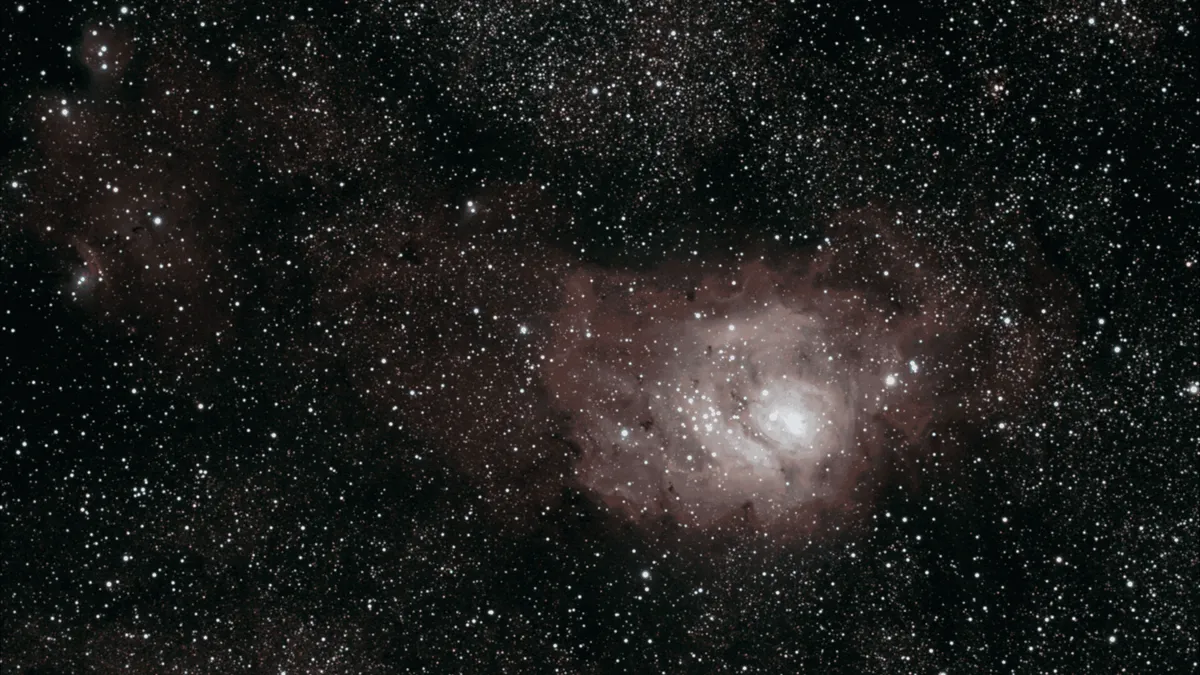
Sedona: Stargazing Tour with Telescopes and Video Astronomy
A stargazing session using dedicated telescopes and live video astronomy so the group can see the same view on a screen, run by working astronomers. Suits anyone who wants a closer, narrated look rather than naked-eye stargazing.
Check Availability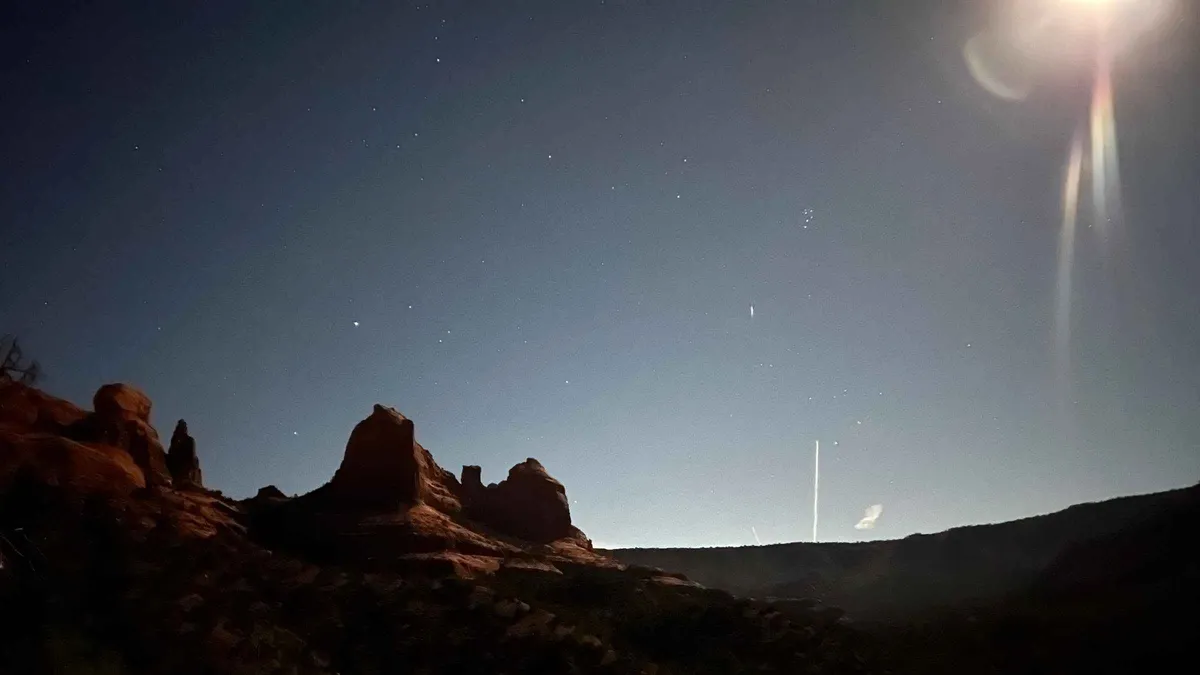 from $199.95
Sedona: Private Stargazing Tour with a Local Guide
A private stargazing outing into the Seven Canyons area with time on the walk to cover the area's plants and animals before dark. Suits small groups who want a guide to themselves rather than a shared session.
Check Availability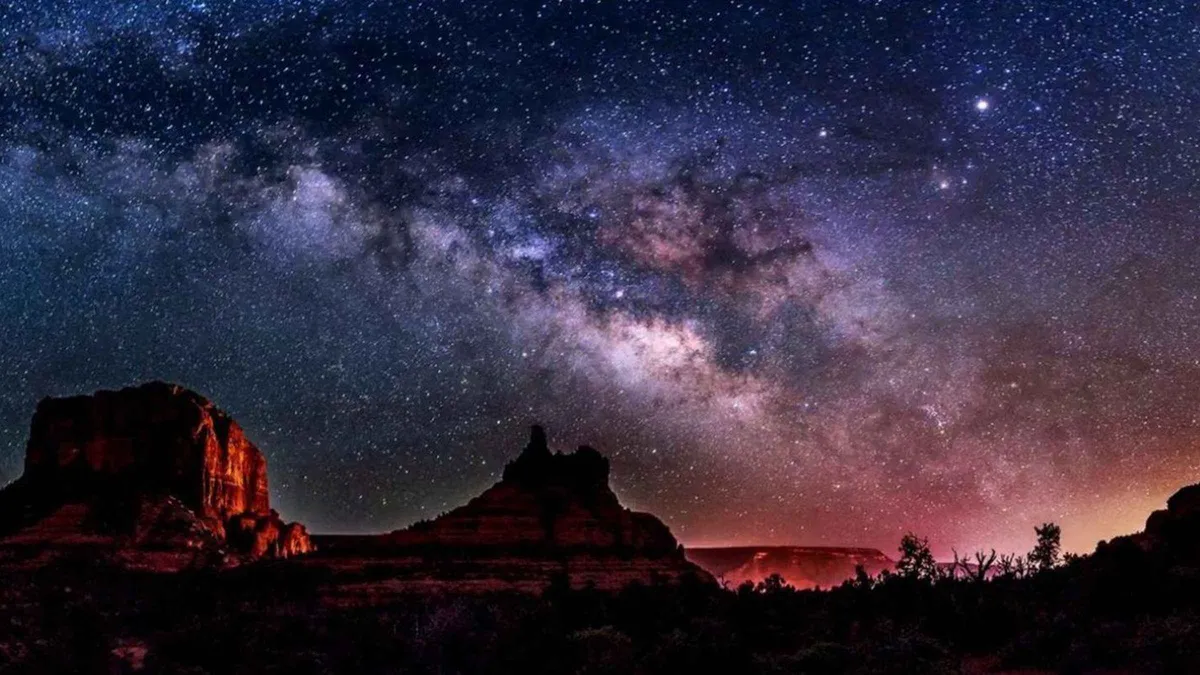 from $160
Only night-vision-goggle stargazing tour on this page
from $160
Only night-vision-goggle stargazing tour on this page Sedona: Nighttime UFO & Stargazing Tour
A 1-hour nighttime session using military-style night-vision goggles to scan the sky, framed around unexplained-activity claims rather than standard astronomy. Suits visitors curious about Sedona's UFO folklore specifically.
Check AvailabilityPrices, ratings and details are the platform's own, checked in Q3 2026; dollar figures are the listed prices — the platform bills in your account's currency.
Free dark pull-offs, and which ones need a Red Rock Pass
Cross-checked against the Coconino National Forest's own Red Rock Pass fee-site list, which names every developed trailhead that requires the pass, in Q3 2026.
Two of the pull-offs commonly named for Sedona stargazing sit on the Forest Service's own paid list: Fay Canyon Trailhead, on Boynton Pass Road, and Baldwin Trailhead, reached through the town of Oak Creek. Both need a Red Rock Pass, the America the Beautiful Interagency Pass, or a fee-machine day pass purchased at the lot, the same as they would during the day. The fee program does not switch off after dark.
Several other commonly named spots are not on that fee-site list at all, which means no Red Rock Pass is required to park at them: Dry Creek Road's roadside pull-offs in West Sedona, the Aerie trailhead at the end of Boynton Pass Road, the Two Trees and Jordan Trailhead observation areas off Forest Roads north of town, Beaverhead Flat Scenic Overlook along State Route 179, and Merry Go Round Rock off Schnebly Hill Road. None of these is a developed, fee-collecting trailhead in the Forest Service's own program, so they are free to use after dark, though a small unpaved lot with no lighting and no cell signal is a different experience from a staffed park: bring a real flashlight, not a phone screen, and know the route before it gets dark.
No official Coconino National Forest or City of Sedona page states whether the small lots at these free pull-offs are patrolled, gated, or monitored after dark, and no page publishes how many cars any of them holds. Arrive with a backup spot in mind rather than counting on one specific pull-off having space, especially on a clear weekend night in the cooler months.
Local visitor guides describe the Two Trees and Jordan Trailhead observation areas as regular gathering spots for Sedona's own amateur astronomy club, though no government page confirms a formal arrangement with either location, so treat that as a reputation rather than an official designation. Either way, both sit off unpaved Forest Roads north of town rather than on a paved highway pull-off, so a passenger vehicle with reasonable clearance can usually manage them in dry weather, but neither is plowed or maintained the way a paved trailhead lot is.
Best months and moon phases to plan around
Built from the region's 30-year climate averages and the monsoon calendar the National Weather Service publishes for northern Arizona, computed in Q3 2026.
Two variables decide a clear, dark night more than anything else: cloud cover, which follows the season, and moonlight, which follows a roughly month-long cycle no calendar season controls. October through May carries far fewer rainy days than the June-through-September stretch, so the odds of a clear night are simply better outside monsoon season, and within that window there is no single best month by any official measure.
Moon phase matters on any date: a sky within a few days of new moon has no competing light at all, and the fainter parts of the Milky Way disappear under a bright gathering or full moon regardless of the season. A trip planned around a specific new-moon week, checked against a current lunar calendar rather than guessed, beats a trip planned around a specific calendar month alone.
| Season | Typical sky reliability | Moon guidance | Note |
|---|---|---|---|
| October to May | Best: lowest average monthly rain days in the 30-year record | Plan around the week nearest new moon for the darkest sky | Winter nights are colder; bring a real jacket, not a light layer |
| June 15 to September 30 (monsoon) | Least reliable: afternoon storm cells build most days in this window | Check the evening forecast the same day, not days ahead | Early monsoon (mid-to-late June) is usually quieter than the August peak |
| Any month, within about 5 nights of full moon | Weather aside, the sky itself washes out | Faint Milky Way detail and dim nebulae are hardest to see | A telescope tour still shows the Moon, Saturn and brighter targets well |
| Any month, within about 5 nights of new moon | The darkest possible sky, weather permitting | Best week for the Milky Way and faint deep-sky targets | Book a guided tour in this window first if the sky itself is the point |
What the Nighttime UFO & Stargazing Tour actually is
The Nighttime UFO & Stargazing Tour hands out military-style night-vision goggles and points them at the sky over roughly an hour, and its own marketing language leans on "unexplained activity" and "secrets overhead." What it is: a night-vision-goggle sky tour that reliably shows satellites, aircraft, meteors and stars in a way naked eyes cannot, since night vision amplifies faint light no human eye can gather on its own. What it is not: a scientific investigation, an official Forest Service or NASA-affiliated program, or a tour that can promise a sighting of anything genuinely unexplained. No government agency tracks or certifies UFO activity over Sedona specifically, and this page makes no claim about what any goggle view actually shows on a given night.
It is the highest-rated of the three tours here by review count, at 4.6 stars across 159 reviews, which says more about visitors enjoying the novelty of night-vision optics than about anything being confirmed in the sky. A visitor who wants a conventional astronomy experience is better served by the telescope tour or the private guided tour; a visitor curious about the goggle experience itself should book this one for what it is, not for a promise it does not make.
What to bring if you go without a tour
The desert cools fast after sunset even in summer, so a real jacket, not a light layer, is worth the trunk space at any of the free pull-offs. A flashlight with a red-light mode preserves night vision for anyone else nearby and is worth more than a phone light at any of the trailhead lots. None of the free spots above has a restroom, water, or cell coverage confirmed by an official source, so treat each one as backcountry parking after dark, not a staffed overlook.
A folding chair or a blanket for lying flat beats standing for an hour of neck-craning, and binoculars do more for a first-timer than a phone camera, which struggles badly with a truly dark sky without a tripod and a long exposure setting most visitors never bother finding in their camera app.
Photographing the sky, and why the light code matters for your shot
A phone camera's default night mode brightens what it can see, but it cannot gather enough light on its own for a real Milky Way photo; a camera capable of a long exposure (several seconds to tens of seconds) on a stable tripod is what separates a usable astrophotography shot from a blurry smear of dots. Even a basic mirrorless or DSLR at a wide aperture, focused manually to infinity, out-performs any phone at this specific task.
The same lighting code that earned Sedona its Dark Sky status is also why a photo taken from one of the pull-offs above tends to come out cleaner than a similar shot from a suburban trailhead near almost any other American city: less scattered light in the frame means less orange sky-glow washing out faint stars, which is a direct, visible consequence of the shielded-fixture and lumens-cap rules covered above. A tripod, a headlamp with a dim red-light setting so it does not ruin your own night vision or another visitor's, and a fully charged battery (cold desert nights drain batteries fast) round out what a serious shot actually needs beyond the sky itself.
Round out the night
What pairs naturally with a night under Sedona's sky.
Vortex sites
Several of the same trailheads people visit for vortex sites by day sit near the free stargazing pull-offs above; the vortex guide covers what the Forest Service does and does not manage there.
Red Rock Pass
The full fee-site list and price tiers for the trailheads that do require a pass, day or night.
Best time to visit
Month-by-month weather and the monsoon calendar behind the sky-reliability table above.
Sedona tours hub
Every guided way to see Sedona, day and night, sorted by what the tour actually does.
Sedona stargazing questions
Is Sedona good for stargazing?
Yes: Sedona has been an International Dark Sky Community since 2014, one of only a handful of towns in the world with a lighting code built specifically to keep the night sky dark, and it sits far from any large city's light dome. See what the designation actually requires of the town's own lighting.
Can you see the Milky Way from Sedona?
Yes, from any of the free dark pull-offs on a clear night away from the monsoon season, and especially within about five nights of new moon, when no moonlight competes with the fainter parts of the sky. See the moon-phase planning table for the specifics.
Where can I find free stargazing in Sedona?
Dry Creek Road's roadside pull-offs, the Aerie trailhead, the Two Trees and Jordan Trailhead observation areas, Beaverhead Flat Scenic Overlook and Merry Go Round Rock are not on the Forest Service's Red Rock Pass fee-site list, so none of them requires a parking pass. Fay Canyon and Baldwin Trailhead, two other commonly named spots, do require one. The full breakdown is in free dark pull-offs above.
Do I need a Red Rock Pass to go stargazing at night?
Only at the specific trailheads the Forest Service lists as fee sites, which include Fay Canyon and Baldwin Trailhead among the spots commonly used for stargazing; the fee program applies after dark the same as during the day. Several other free pull-offs nearby are not on that list at all. See the Red Rock Pass page for the complete list and price tiers.
Is the Nighttime UFO & Stargazing Tour a real scientific tour?
It is a night-vision-goggle sky tour, not a scientific investigation or a government-affiliated program; no agency tracks or certifies UFO sightings over Sedona. See what the tour actually is for the honest version of what the goggles show and do not show.
What is the best time of year for Sedona stargazing?
October through May carries fewer rainy nights than the mid-June-to-September monsoon window, so the odds of a clear sky are simply better outside monsoon season; within that stretch, the week nearest new moon matters more than the specific month. See best months and moon phases for the full reasoning.
Sedona's Night Sky on Film
Three looks at what Sedona's dark sky actually looks like after sunset, filmed on location.
Sedona Stargazing
A ground-level look at a Sedona stargazing session, showing the kind of dark sky the pull-offs above offer.
Video: The HumanWare ProjectStargaze under the skies of Sedona
A local news segment on why Sedona's sky stays dark and what the town's Dark Sky status means in practice.
Video: 12 NewsArizona International Dark Skies
A statewide look at Arizona's Dark Sky places, with Sedona among the towns covered.
Video: Visit ArizonaVideos load from YouTube only when you press play.
Reviewed Q3 2026 (July–September 2026); next review Q4 2026. Prices, hours and terms are set by the venue or operator and confirmed at checkout.
We may earn a commission if you book through one of our links, at no extra cost to you. Full affiliate disclosure