 Sedona City Guide
Getting Around Sedona
Getting around Sedona is not a transit-map question, because there is no in-town bus network to draw one from. It is a routing question: which of the town's few purpose-built services covers the trip you actually need, and which trips still need a car, the same question the guide's front page for the rest of the trip answers for the sights themselves. Two highways meet in one junction, a free shuttle covers five trailheads on four days a week, a $2 bus runs to Cottonwood, and everything else (Grand Canyon, Jerome, the scattered West Sedona restaurants) is still a driving trip. The fares and schedules below are read from each operator's own page in Q3 2026; the pass and parking detail sits on the Red Rock Pass page and parking in Sedona.
Quick answer One free shuttle, one $2 bus, everything else needs a car
Sedona has no fixed-route municipal bus network. What it has instead is a free shuttle to five trailheads, a $2 Verde Shuttle bus to Cottonwood, two paved e-bike tours, and rideshare that is real but unreliable. A visitor who stays in Uptown, hikes only the shuttle-served trails and skips the Grand Canyon can get through a trip without driving. Almost everyone else needs a car for at least part of the stay.
Key takeaways
- The free Sedona Shuttle covers Cathedral Rock, Little Horse, Soldier Pass, Dry Creek Vista and Mescal: nothing else, and only Thursday to Sunday.
- The $2 Verde Shuttle is the only scheduled bus in or out of Sedona besides an airport shuttle, running to Cottonwood roughly every 45 minutes.
- Two guided e-bike tours cover paved roads past several trailheads if you want to move under your own power without hiking gear.
- Renting a car is still the only way to reach the Grand Canyon, Jerome or most of day trips from Sedona.
Two highways, one Y, and no bus network to speak of
Sedona sits at the meeting point of two state highways. SR-89A runs northwest through Oak Creek Canyon toward Flagstaff and southwest through West Sedona toward Cottonwood; SR-179 runs south through the Village of Oak Creek toward I-17. They meet in Uptown at a junction locals just call "the Y," and that single intersection carries almost every car in town at least once a day: the grocery run, the trailhead drive, the dinner reservation. The Arizona Department of Transportation rebuilt the Y and several SR-179 intersections (Canyon Drive, Morgan Road, Chapel Road) as roundabouts rather than signals, a project the City of Sedona's own site confirms; neither ADOT nor the city publishes a single confirmed count of how many roundabouts that adds up to, so we do not print one.
What the town does not have is a City of Sedona municipal bus route running fixed stops on a fixed schedule the way a larger city would. There is no all-day hop-on hop-off loop connecting Uptown, West Sedona and the trailheads. What exists instead is a set of narrower, purpose-built services: a free shuttle that only goes to specific trailheads on specific days, a regional bus that only goes to Cottonwood, and a seasonal airport connector. Knowing which service covers which trip, and which trips none of them cover, is most of what this page is for.
Do you need a car in Sedona?
The honest answer splits by itinerary. What follows is the version of a Sedona trip that works without a rental, and the specific points where it stops working, checked against each service's own page in Q3 2026.
A car-free trip is realistic if you accept its shape. Fly into Phoenix and take the Groome Transportation shuttle straight to a Sedona hotel. Base yourself in or near Uptown, where the free public parking lots and the shops are within walking distance of each other.
For hiking, use the free Sedona Shuttle to reach Cathedral Rock, Little Horse, Soldier Pass, Dry Creek Vista or the Mescal approach to Devil's Bridge, but only Thursday through Sunday, 7:00 am to 5:30 pm. For a day in Cottonwood or a Verde Valley wine tasting, the Verde Shuttle covers that leg for $2. For a scenic outing that doesn't need a trailhead, book one of the paved e-bike tours instead of a hike.
Here is where that plan breaks. The trailhead shuttle does not serve Boynton Canyon, West Fork, Fay Canyon, Doe Mountain, Airport Mesa or most of the other named trails on the hiking trails page. Those need a car and, on most of them, a Red Rock Pass.
It does not run Monday through Wednesday at all. It does not reach the Grand Canyon, which needs either a rental or a seat on a guided van tour, or Jerome, Montezuma Castle or Slide Rock State Park, none of which sit on any scheduled route we could confirm. And within Sedona itself, restaurants and trailheads in West Sedona sit spread along several miles of SR-89A with no shuttle stop near most of them, so an evening out from an Uptown hotel usually means a rideshare, a taxi, or a car.
The trailhead shuttle, in one paragraph
The free Sedona Shuttle runs from two Park & Ride lots (Posse Grounds and North SR-179) to five trailheads: Cathedral Rock, Little Horse, Soldier Pass, Dry Creek Vista (for Devil's Bridge) and Mescal (also for Devil's Bridge). It operates year-round, Thursday through Sunday, 7:00 am to 5:30 pm, with 15 to 45 minutes between pickups depending on the route. No reservation, no fare, no Red Rock Pass required, and the vehicles are wheelchair accessible with racks for three bikes.
That is the summary; the full stop list, the wait times per route and the honest answer on whether the trailhead lots are closed to cars while it runs are on the Sedona Shuttle page. This page only covers where the shuttle fits into your overall transport plan.
The $2 Verde Shuttle to Cottonwood
Fares and schedule below are from the operator's own rider guide and the City of Cottonwood's fare page, both read in Q3 2026. The service was previously branded Verde Lynx; it now operates as Verde Shuttle, run by Cottonwood Area Transit (CAT), a City of Cottonwood department.
This is the one scheduled public bus connecting Sedona to anywhere outside town, aside from the Groome airport shuttle covered on Phoenix to Sedona. It links central Cottonwood with West Sedona, Uptown Sedona and the northern stretch of SR-179, and it runs 362 days a year with buses roughly every 45 minutes on the five busiest weekdays. The first Cottonwood departure is around 6:00 am, arriving Uptown Sedona about 6:30 am; the last Uptown departure is around 10:00 pm, arriving back in Cottonwood about 10:30 pm.
| Fare | Regular | Discounted | Who qualifies |
|---|---|---|---|
| Cottonwood ↔ Sedona, one-way | $2.00 | $1.00 | Seniors 60+, veterans, students, persons with disabilities, certified low-income riders |
| Within Sedona only, one-way | $1.00 | $0.50 | Same discount categories as above |
| Monthly pass | $60.00 | $30.00 | Unlimited rides for the month |
| Combined CAT + Verde Shuttle monthly pass | $70.00 | not stated | Covers Cottonwood's in-town CAT routes plus the Verde Shuttle |
Passes and single fares are sold through the Token Transit app, by phone, or in person at the Cottonwood Transit Office, 340 Happy Jack Way. Cottonwood itself is worth the ride for the Old Town shops and Verde Valley wine-tasting rooms, and it is the base for the Verde River kayak trip that runs as a day trip from Sedona. For anyone weighing whether Sedona needs a rental car at all, this bus is the difference between "Cottonwood is reachable" and "Cottonwood needs a car."
E-bikes: covering ground without hiking boots or a car
Two guided e-bike tours run from a shop on West SR-89A and stay entirely on pavement (no singletrack, no technical handling) while still passing several trailheads and red-rock viewpoints along roads with light traffic capped around 25 mph. One is a sunset loop past red rock vistas; the other runs through the Dry Creek area to the Amitabha Stupa. Both are two hours, guided, round trip from the shop, and neither charges a separate entry fee.
The operator's own listing also notes an unguided rental option at roughly the same hourly cost for visitors who would rather set their own pace, and the free Sedona Shuttle to a trailhead followed by a walk on the paved path is the zero-cost version of the same idea for a shorter outing.
Cycling on your own
Beyond the two guided tours above, this page cannot point to an official City of Sedona or ADOT bike-lane map or a published mileage figure for on-road cycling infrastructure. No source we could confirm states one. What the tour operator's own listings do confirm is that the roads used for the guided rides are paved, and carry "light traffic" at up to 25 mph, which is the closest thing to an official characterization of road cycling conditions in town that we found.
If you are bringing your own bike rather than joining a tour, treat that as the extent of what is published, and expect to share the road with car traffic rather than a marked bike lane on most streets.
Renting a car: book before you land
No City of Sedona, ADOT or airport authority page publishes a statement on Sedona-area rental car availability. It is a market condition, not a fact any agency tracks or reports. What can be said practically is that Sedona and Phoenix Sky Harbor rental counters sell out of cars during Sedona's two peak seasons, spring (March through May) and fall (September through November), and a reservation made close to the travel date risks a higher price or no car at all.
If your plan involves the Grand Canyon, Jerome or any trailhead the free shuttle does not reach, book the rental as early as you book the hotel rather than as an afterthought.
What a car-free day actually looks like
Morning: walk from an Uptown hotel to the free lots area, then over to Posse Grounds Park & Ride, and catch the Sedona Shuttle out to Cathedral Rock or Soldier Pass for an early hike before the 9:00 am to 2:00 pm crowd window described on parking in Sedona. Midday: ride the shuttle back to Posse Grounds, walk into Uptown for lunch, and catch the Verde Shuttle toward Cottonwood for an afternoon of wine tasting or a walk through Old Town. That leg alone is worth planning around, since it is the one scheduled way out of town besides a car. Evening: back in Sedona by the Verde Shuttle's return run, with dinner walkable from an Uptown base.
Where this breaks down: swap in a Grand Canyon day, Jerome, or a trailhead the shuttle doesn't reach, and the whole plan needs a car instead. It also assumes the shuttle is running: Thursday through Sunday only, so a Monday-to-Wednesday stay needs the e-bike tours or a rental for the hiking portion.
How the season changes all of this
Spring (March through May) and fall (September through November) are Sedona's two heaviest visitation windows, the same seasons that strain rental car availability. The Y junction and the SR-179 approach through the Village of Oak Creek both see materially heavier traffic in those months, and the free shuttle's 15-to-45-minute wait window skews toward the longer end on a busy peak-season weekend, since demand for the same fixed number of vehicles goes up without the schedule itself changing. Summer's heat and winter's cold both thin out visitation somewhat, which makes both driving and the shuttle noticeably easier.
No source publishes exact seasonal ridership or traffic figures to size that difference, but the pattern holds consistently enough across every source we read to state as a general rule.
Arriving with luggage, and moving it around town
None of Sedona's transport options are built around carrying suitcases. The Groome Transportation shuttle from the airport handles checked luggage as part of its normal service, since it exists specifically for arriving travelers, but the Sedona Shuttle to the trailheads and the Verde Shuttle to Cottonwood are day-use services with no published luggage policy beyond the standard bike-rack and wheelchair accommodations already covered on those pages. If your hotel sits more than a short walk from where the airport shuttle drops you, plan on a taxi or rideshare for that last leg with bags rather than assuming a free shuttle covers it, and confirm your hotel's own pickup policy when you book, since several Sedona properties do run their own guest shuttles that aren't part of any public service described on this page.
The one decision that shapes everything else
Before booking a hotel, tours or a rental, decide whether your Sedona days include a Thursday through Sunday, since that single fact determines whether the free trailhead shuttle is available to you at all. A trip confined to Monday through Wednesday gets none of that service, which pushes the plan toward either a rental car for the whole stay or the paved e-bike tours for the hiking portion. A trip that does include those four days can lean on the shuttle, the Verde Shuttle and a walkable Uptown hotel, and only needs a car for the parts explicitly listed in do you need a car above.
Answer that one question first, and the rest of this page tells you which narrow service covers the rest of the trip.
The e-bike option, if you'd rather ride than drive
Both tours run from the same West Sedona shop, stay on pavement, and cover ground a hike would take much longer to reach. Prices and ratings are GetYourGuide's own figures, checked in Q3 2026.
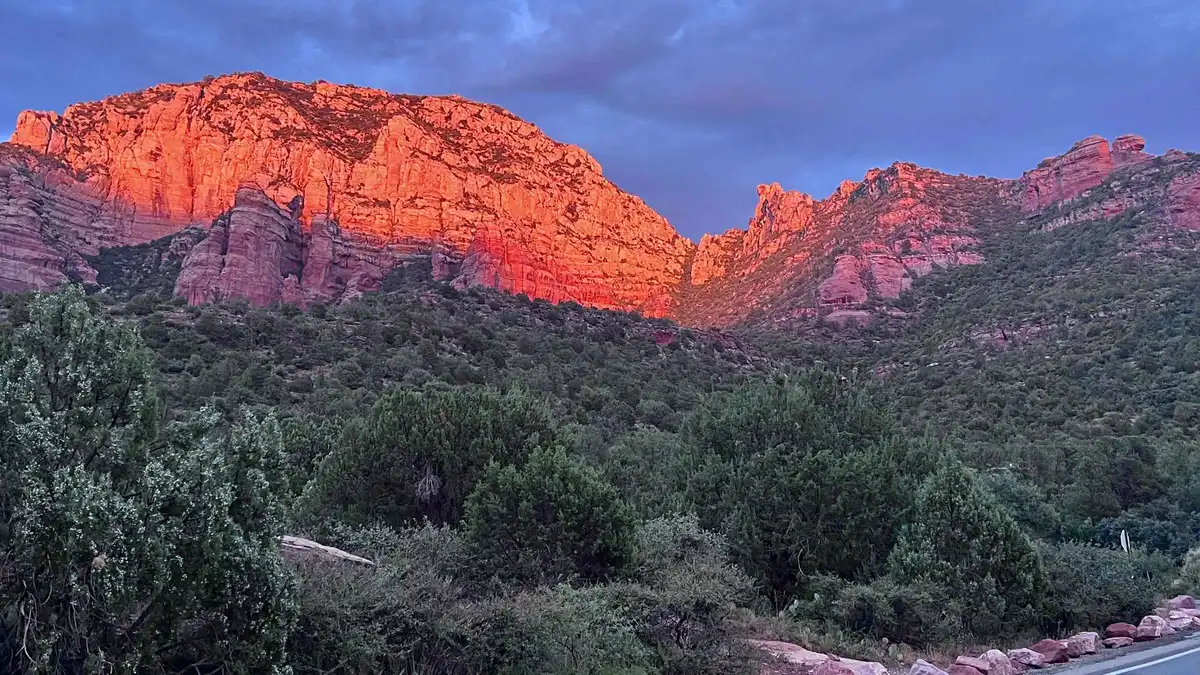 from $121.50
Sedona: E-Bike Sunset Tour to Red Rock Vistas
A paved e-bike loop past several trailheads to red rock viewpoints timed for sunset, staying on roads rather than singletrack. Suits riders who want scenery without off-road handling. A new listing on GetYourGuide with no reviews yet.
Check Availability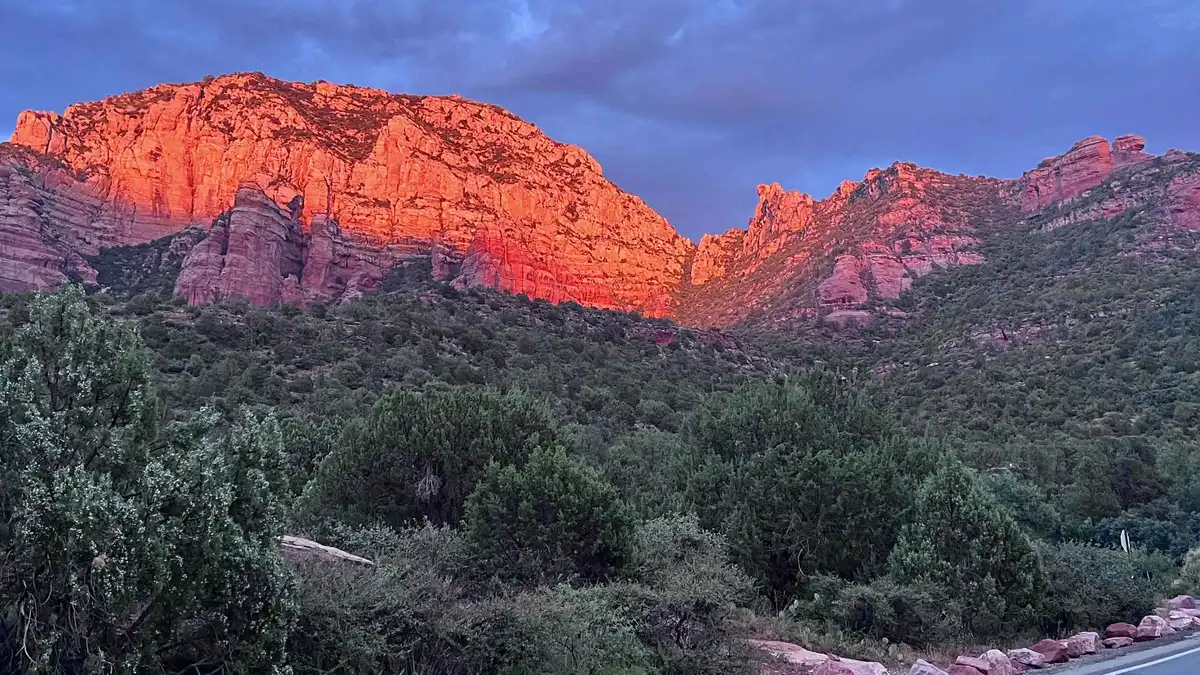 from $135
Sedona: E-Bike Sunset Tour Dry Creek area and Stupa
A paved e-bike route through the Dry Creek area to the Amitabha Stupa, combining a red rock ride with a stop most visitors otherwise drive to. Suits riders who want to see the Stupa as part of an active outing rather than a quick parking-lot visit.
Check AvailabilityPrices, ratings and details are the platform's own, checked in Q3 2026; dollar figures are the listed prices — the platform bills in your account's currency.
Where the shuttle, the bus and the e-bike shop start
The Y junction anchors the road network; the two Park & Ride lots are where the free trailhead shuttle starts; the e-bike shop is where both guided rides begin. Coordinates are approximate to each location, not a surveyed figure.
Leaving Sedona at the end of the trip
Whatever got you here works the same in reverse, with one extra planning step: give yourself a real buffer. If you're on the Groome Transportation shuttle back to Sky Harbor, book a pickup time that lands you at the airport well ahead of a flight, since the shuttle makes stops in Cottonwood, Camp Verde and the Village of Oak Creek along the way and the ride is not a direct express. If you're driving yourself, the same roundabouts through the Village of Oak Creek and the Y junction that slow the arrival also slow the departure, and Sedona's own peak-season traffic, spring and fall, compounds whatever buffer you'd otherwise plan.
Returning a rental car adds its own small logistics chain: refuel before the airport rather than at the last gas station you happen to pass, since Sedona's own stations sit mostly along SR-89A in West Sedona rather than near the direct route out on I-17. If you flew into Flagstaff Pulliam rather than Phoenix, remember the seasonal shuttle runs March through October only and needs a reservation for the return leg too, not just the arrival.
Where to go next
The shuttle schedule in full
Every stop, every wait time, and the parking-lot closure question no agency will confirm: the Sedona Shuttle page.
Thu–Sun, 7:00 am–5:30 pmWhere to leave the car in town
Uptown's free lots, the Main Street meters and what happens when a trailhead lot fills: parking in Sedona.
Free and paid lots comparedGetting here in the first place
The Phoenix shuttle, the seasonal Flagstaff run and the drive itself: Phoenix to Sedona.
Sky Harbor and Flagstaff PulliamGetting around Sedona: questions
Do you need a car in Sedona?
Not strictly, if you stay in Uptown, hike only the five shuttle-served trailheads and skip the Grand Canyon and Jerome. Most visitors who want either of those, or a trailhead outside the shuttle's route, need a car for at least part of the trip: see do you need a car above.
Is there a free trolley or bus in Sedona?
There is no fixed-route municipal bus network inside town. The free service is the Sedona Shuttle to five trailheads, and the paid $2 Verde Shuttle runs to Cottonwood, not around Sedona itself.
Is Uber reliable in Sedona?
It operates, but a local guide describes availability as inconsistent, with drivers gravitating toward Flagstaff during peak weekends: see rideshare and taxis. Have a backup plan for an early trailhead pickup or a dinner reservation.
Is it easy to get Ubers in Sedona?
Not reliably easy. Uber and Lyft both operate in town, but it is not as easy to get an Uber in Sedona as in a larger city: drivers are fewer and tend to gravitate toward Flagstaff, about 30 miles north, where demand is steadier. See Uber, Lyft and taxis for what that means for planning a pickup.
How do I get to Sedona trailheads without driving?
The free Sedona Shuttle reaches Cathedral Rock, Little Horse, Soldier Pass, Dry Creek Vista and Mescal, Thursday to Sunday only. Every other trailhead on the hiking trails page needs a car.
Is there a hop-on hop-off bus service in Sedona?
No. The Verde Shuttle stops at fixed points along its Cottonwood-to-Sedona route rather than looping through the town's attractions, and the trailhead shuttle only serves its five named stops: see the Y junction for why a wider loop route does not exist.
How much does the Verde Shuttle to Cottonwood cost?
$2.00 one-way at the regular fare, $1.00 discounted for qualifying riders, per Cottonwood Area Transit's own fare page checked in Q3 2026. The full fare table is in the Verde Shuttle section.
Is traffic bad in Sedona?
It varies heavily by season. Spring and fall bring the heaviest congestion at the Y junction and along SR-179; summer and winter are noticeably quieter. See how the season changes all of this.
What does a day in Sedona without a car look like?
A realistic version pairs the free Sedona Shuttle for a morning hike with the $2 Verde Shuttle for an afternoon in Cottonwood, based from an Uptown hotel: see what a car-free day actually looks like for the full walk-through and where it breaks down.
Getting Around Sedona on Video
Three clips on the practical side of moving around town, not the highlight reel.
Want to get away? How the City of Sedona is making it easier to get around town
A local news segment on the city's own transit initiatives and why they exist.
Video: ABC15 ArizonaHow Do You Get Around In Sedona?
A visitor's first-hand walkthrough of the shuttle, driving and parking reality.
Video: Exploring CampgroundsBest Ways To GET Around Sedona
A rundown of transport choices filmed on location around town.
Video: Zeegee ZurielVideos load from YouTube only when you press play.
Reviewed Q3 2026 (July–September 2026); next review Q4 2026. Prices, hours and terms are set by the venue or operator and confirmed at checkout.
We may earn a commission if you book through one of our links, at no extra cost to you. Full affiliate disclosure